Compact SUV Review: 2018 Buick Encore

 Buick, Reviews  Comments Off on Compact SUV Review: 2018 Buick Encore
Jun 012018


Fuel efficiency and versatility, that’s what makes the compact sport utility vehicles (SUVs) so appealing. Buick entered the segment in 2013 with the Encore, now Buick’s best-selling vehicle. Latino Traffic Report recently test-drove the 2018 Encore at a time of year that put its versatility to the test.

Offered in Encore, Preferred, Sport Touring, Preferred II, Essence, and Premium trims, I drove the latter that also included the available all-wheel drive.

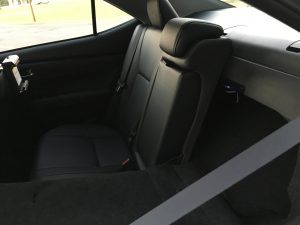
The Encore arrived for testing in December, just in time for Christmas tree shopping. While it took three steps to fold the 60/40-split rear seat flat, once done it exposed 48.4 cubic feet of storage space, plenty of room for the six-foot Frasier Fur that I selected. Though I didn’t need to, I could have folded the front passenger seat flat to fit longer items. Cargo carrying also includes people and the Encore can seat up to five.

While all SUVs offer versatility, smaller ones navigate urban settings with greater ease. The Encore was no exception, performing handily, particularly when maneuvering through Austin’s holiday traffic.

Powered by a choice of two 1.4-liter turbocharged engines, the test model came with the more powerful of the two that can produce 153 horsepower and 177 lb.–ft. of torque and included Direct Injection with a subtle start/stop mode to conserve gas. It had an EPA estimated fuel economy of 26 miles per gallon (mpg) in the city and 31 mpg on the highway. I averaged 25.2 mpg during the weeklong test drive.

Tech features, like OnStar 4G LTE with a Wi-Fi hotspot, now standard across the brand’s model line sold in the United States, help the Encore stand out in a crowed field. The hot spot allows passengers to connect up to seven devices to high-speed wireless Internet.

Improvements for 2018 include high-definition radio, capless fuel fill, and the ionizing interior air cleaner (standard only on the Premium trim), Universal Home Remote (Essence and Premium trims) and a new exterior color Coppertino Metallic.

Standard convenience features on all Encores include push-button start, keyless unlock via the exterior door handles and an eight-inch color touchscreen, as well as Keyless Open and Start. As the top-of-the-line trim, the Premium test model also included a few more posh features like heated front seats and steering wheel, dual-zone air conditioning, and the Bose premium audio.

For added confidence, standard safety features include a rear-vision camera, StabiliTrak stability control system with full-function traction control, the OnStar basic plan for five years, and a theft deterrent system. The test model included blind spot and forward collision alerts, front and rear park assist, and rear cross traffic alert.

While pricing for the 2018 Encore starts at $23,915, stepping up to the Premium trim adds lots of dollars as well as stuff. The as-tested price that included the Experience Buick Package ($2,390) with navigation, a power moonroof, an eight-inch touch screen, and Apple Carplay and Android Auto capability, came to $36,820.

Sí: Roomy and nimble, the Buick Encore offers the versatility required of an SUV, especially a little one, and its fuel economy is competitive in the segment.

No: The Buick infotainment system was a little clunky, especially for selecting presets, and the price climbs quickly when adding features.


Car Review: 2018 Golf GTI

 Reviews, Volkswagen  Comments Off on Car Review: 2018 Golf GTI
Apr 212018


At Latino Traffic Report (LTR), we continue to root for the manual transmission, so whenever we get a test model delivered with one, it’s always a good day. Such was the case when the 2018 Volkswagen Golf GTI 2.0T SE arrived, equipped with a six-speed manual transmission (standard equipment) and lots of pep.

What makes a manual transmission so preferable, especially on a compact car, is that it ramps up the fun-to-drive experience of an otherwise lackluster model—most five-door hatches are built for efficiency and convenience, not fun. As a result, the GTI has received more than a dozen awards since its redesign in 2015.

Described by VW as its “hot hatch,” the GTI debuted in 1983 and since then has transformed the hatchback from a utilitarian car and into a sporty compact. Redesigned for the 2015 model year, the seventh generation of the Golf GTI included three available trim levels—S, SE, and Autobahn. They remain for 2018 but with a few improvements.

The four-cylinder, 2.0-liter TSI turbocharged direct-injection engine, built in Silao, Mexico, returns but it’s been improved in 2018 to produce 220 horsepower (achieved on premium fuel), and a torque peak of 258 lb.–ft. Paired to the six-speed manual transmission, it can achieve an EPA-estimated fuel economy rating of 25 miles per gallon (mpg) in the city and 33 mpg on the highway. During the test it achieved an average fuel economy of 27 mpg.

The available six-speed automatic transmission incorporates a launch control feature and a new Start-Stop System designed to save gas, earning an EPA-estimated fuel economy of 24 mpg in the city and 32 mpg on the highway.

While not the top-of-the-line model, the GTI does sits above the Golf S and SE, expanding its list of standard features to include heated front seats, a sunroof, a blind spot monitor, rear traffic alert, forward collision warning, autonomous emergency braking with pedestrian monitoring, and keyless access with a push button start.

For those who can’t step up to the GTI, standard features on all Golfs include cruise control, air conditioning, VW Car-Net App Connect, a rearview camera, LED headlights, and daytime running lights and taillights.

Known for sportiness, the Golf GTI is still a hatchback and as such, versatile, offering cargo carrying room of up to 52.7 cu. ft. with the rear seat folded flat. The infotainment touchscreen has also increased to 6.5 inches for 2018 on the base model. It measured eight inches on the test model.

Like other brands, VW has taken to using a warranty to tilt car buyers in their favor. The Golf GTI is covered by a transferable, six-year or 72,000-mile (whichever occurs first) bumper-to-bumper New Vehicle Limited Warranty.

Pricing for the 2018 Volkswagen Golf GTI with a six-speed manual transmission starts at $27,265. The price as–tested, including black leather seating with red accent stitching ($695) and red ambient lighting came to $32,015.

Sí: The Golf GTI was fun to drive and included nice creature comforts like heated seats and a blind spot monitor.

No: While VW likes to call the GTI an affordable performance vehicle, it’s a little pricey, especially compared to the competition.


CUV Review: Mazda CX-9

 Mazda, Reviews  Comments Off on CUV Review: Mazda CX-9
Feb 282018
 

The Mazda CX-9 pictured in front of this historical mural in Bertram, Texas.

Packed up and ready to leave campus at UT Austin.

You never know when you’ll get a chance to use all the cubic feet of cargo carrying capacity in a crossover utility vehicle (CUV), but when your nephew moves out of his dorm that’s as good a time as any. Latino Traffic Report recently tested the Mazda CX-9 Grand Touring including its 71.2 cubic feet of cargo volume with the second and third rows folded flat that provided just enough room to make the move in one trip.

First introduced in 2007, the midsize CUV entered its second generation with the redesigned version in 2016. The CX-9’s success helped grow a complete lineup of CUVs for Mazda and it continues to lead the way for its siblings, offering more versatility and improved drivability.

Cargo can also be defined as people. While classified as a midsize CUV, the CX-9 is the largest offering from Mazda, with three rows of seating and a capacity to seat seven. The seats folded easily, sans breaking a nail, to reveal the cargo room. Once loading began, I was shocked at  how much we managed to fit in the CX-9.

Available with all-wheel-drive (AWD), the test model was configured as a front-wheel drive (FWD) giving it a fuel economy advantage over the AWD. A 2.5-liter turbocharged four-cylinder engine that can achieve 227 horsepower and 310 ft.–lb. of torque, matched to a six-speed automatic transmission with Sport and manual shift mode comprise Mazda’s Skyactiv powertrain on all CX-9s. The FWD version should achieve an EPA estimated city/highway fuel economy of 22/28 miles per gallon (mpg). I averaged 26.1 mpg in the city and up to 27 mpg on the highway during the test.

While transporting the cargo, many other assets from the CX-9 emerged, like a standard rearview camera, Bluetooth, and the Mazda Connect infotainment system, with a seven-inch or the available the eight-inch touch screen that came with the test model. Compared to other infotainment systems, however, this one was not so user friendly. While the number of presets, from AM to XM, is limitless, it took four—five steps to program each one.

One away from the top-of-the-line trim, the Grand Touring included additional features like a head up display, navigation, second-row retractable sunshades, leather trimmed seats with heated seats in the front and second-row (new for 2018), and Sirius/XM satellite radio. Convenience features included Lane Keep Assist, Mazda Advanced Keyless Entry and Start System, Mazda Radar Cruise Control, and a Rear Backup Sensor.

The best news for 2018 is that the blind spot monitor and rear cross traffic alert are now included as standard on all CX-9s. New standard features for 2018 on the test model included a heated steering wheel and Active Driving with sign recognition that uses a camera to update speed limit information instantly. Additional standard creature comforts on the test model included the Bose AM/FM/HD satellite radio, a power liftgate, second-row window sunshades, and a power moonroof.

Pricing for the 2018 CX-9 starts at $33,070. The as-tested price came to $41,810.

: The CX-9 makes room for plenty of cargo with its easy to fold flat seats.  Super kudos for making the blind spot monitor and forward collision warning standard on all models.

No: Mazda Connect infotainment could be more intuitive.


Car Review: Lexus IS 350

 Lexus, Reviews  Comments Off on Car Review: Lexus IS 350
Jan 292018
 

The Lexus IS 350 in Wimberley, TX.

Launched in 1989, Lexus easily carved out a niche in the premium segment with its reliability and exceptional customer service. But while it was upscale, it wasn’t sexy. Sporting a new design DNA, Lexus has clearly evolved from bland to brilliant. Sitting on Rioja Red leather seats, I recently drove the Lexis IS 350 during a weeklong test for Latino Traffic Report.

For some, the new face of Lexus, led by the signature spindle grille, can be polarizing, but it definitely has fans. According to Lexus, when the second-generation IS took on the new Lexus look in 2013, it became so popular that the restyled 2017 version only involved minor adjustments to its exterior appearance.

The third generation IS originally came in three trim levels but for 2018, that was reduced to two available trim levels, the 300 (200t is now the 300) and 350 that I tested. Horsepower increases by five in 2018 across all powertrains, including the specially tuned 3.5-liter V6 on the 350 that now produces 311 horsepower and 277 lb.–ft. of peak torque and is matched to an eight-speed automatic transmission. It responded with instant speed, accelerating from zero to 60 miles per hour in 5.6 seconds. While all-wheel drive is available, I drove the rear-wheel-drive model with the eight-speed Sport Direct Shift automatic transmission. Additional powertrains include a 2.0-liter turbo four-cylinder matched to an eight speed multi-mode automatic or the 3.5-liter matched to a six-speed automatic.

A sporty car should hug the road not float above it, especially on curves, plus the steering should be tight and responsive. Lexus achieves this with the Drive Mode Select system, standard on all IS trims. This technology comes with Eco, Normal, Snow, and Sport modes to customize the ride and handling. To save gas, select Eco, but for a sportier experience, select Sport. For an additional $3,155, the test model included the F Sport package, ramping up its sportiness further with Sport S/S+ mode which I engaged for tighter handling on a curvy road on the way to Wimberley, TX.

While the IS 350 should achieve and EPA estimated fuel economy of 19 miles per gallon (mpg) in the city and 28 mpg on the highway, I averaged 21.9 mpg.

The IS also included safety features, starting with the standard Lexus Safety System+ that included advanced technology like the pre-collision warning system, Lane Departure Alert with Steering Assist, and High-Speed Dynamic Radar Cruise Control. However, I was surprised to find that the blind spot warning system was a stand-alone option for $600. At this price point it should be standard. For 2018, however, the Enform Safety and Service Connect systems are complimentary for the first ten years.

Pricing for the 2018 Lexus IS starts at $38,820. The as-tested price, including the blind spot monitor, came to $49,530.

Sí: The Lexus IS 350 embraces its sportiness, enhanced by exceptional technology plus the red leather seats were gorgeous.

No: While an affordable option, a blind spot monitor should be a standard feature on a premium brand.


Car review: Subaru Impreza 2.0i Sport

 Reviews, Subaru  Comments Off on Car review: Subaru Impreza 2.0i Sport
Dec 312017


Sales figures affirm Subaru’s appeal to car buyers—December marked the seventy-third consecutive month of yearly month-over-month growth for the company. So what does Subaru offer that others don’t? Perhaps it’s the standard symmetrical all-wheel-drive (AWD)? Or the consistent high marks in consumer publications? Or could it be those Subaru ads about love? On a recent test drive for Latino Traffic Report, the Impreza 2.0i Sport sedan offered clues by living up to its name with impressive new technology and performance.

According to the automaker, 2017 was the ninth consecutive year of record sales for Subaru of America and the tenth consecutive year of sales increases, assisted in part by the Impreza’s popularity. For 2017, the manufacturer redesigned its stalwart compact sedan and hatchback, and to mark the occasion moved Impreza production to the United States, specifically, its Lafayette, IN plant.

On the outside, the Impreza sports Subaru’s new design DNA, namely, the hexagonal grille and hawk-eye headlights. Black cloth seats with red accent stitching, simulated carbon fiber trim, aluminum pedals, a leather-wrapped steering wheel, shift handle, and a CVT shift boot, accentuated the interior on the this trim.

The compact segment excels at economy and fuel efficiency, but the Impreza did have fun-to-drive moments as well, assisted in part by 70-percent increased rigidity and a lower center of gravity.

The new and improved 2.0-liter four-cylinder Boxer engine with direct fuel injection that now produces 152 horses and 145 lb.–ft. of torque, also helped. It’s matched to a Lineartronic continuously variable transmission (CVT) with a seven-speed manual mode function with steering wheel paddle shifters. While I didn’t test it, I was happy to find that a five-speed manual is standard on the Base and Sport trim levels. The Impreza should achieve an EPA estimated fuel economy of 28 miles per gallon (mpg) in the city and 38 mpg on the highway. The Sport model I tested should achieve a little less. I averaged 29.8 mpg during the weeklong test drive.

Subaru ramps up its competitiveness with standard entertainment features like Apple CarPlay/Android Auto, Aha and Pandora, a multi-function display with fuel economy information, the Starlink multimedia system with a 6.5-inch touchscreen, Bluetooth wireless capability, iPod control, and smartphone integration. Standard convenience features include a 60/40-split rear seat, cruise control, keyless access as well as an AM/FM stereo and single disc CD player. The test model added, heated front seats, push-button start and an 8.0-inch touchscreen for the Starlink multimedia system.

Standard safety features include, Vehicle Dynamics Control, symmetrical AWD, 24-hour roadside assistance, and a rear vision camera.
The test model also included the available four-way tire pressure monitoring system, a one-year subscription to STARLINK Safety Plus package, EyeSight driver assist technology ($2,945) with adaptive cruise control, automatic pre-collision braking, blind spot detection, and rear cross traffic alert as well as a moonroof and the Harman/Kardon audio system,

Available in four trim levels—Base, Premium, Sport and Limited—pricing for the 2018 Impreza starts at $19,355. The as-tested pricing came to $26,550.

Sí the Impreza offers a great value in the segment, starting with the standard symmetrical AWD.

No: Acceleration is a little sluggish and I would like more than eighteen presets for the radio.


Car Review: 2017 Toyota Corolla

 Reviews, Toyota  Comments Off on Car Review: 2017 Toyota Corolla
Dec 052017


As 2017 comes to a close, so does the fifty-first anniversary year of the Toyota Corolla. The revolutionary compact sedan continues to evolve from basic transportation to a sporty competitor in its segment, like the 2017 Corolla XSE, recently tested by Latino Traffic Report.

Production on the first Corolla began in November of 1966, eventually crossing the Pacific for its debut in the United States in 1968. It would become the “best selling nameplate of all time,” according to the manufacturer. It has also been one of the top sellers to Latinos car buyers as well.

Initially, it’s fuel efficiency and affordability set it apart. According to Toyota: “When the first Corolla arrived in the U.S., gasoline cost about 25 cents per gallon (the equivalent of about $1.75 in 2016). Many American drivers saw the long-term value in higher fuel economy and chose Corolla for that reason.”

Growing competition has forced Toyota to improve the Corolla’s other attributes, like performance and looks. For its fiftieth anniversary, the Corolla got refreshed styling with a sportier bent, from the new front grille and LED headlamps, as well as a special edition in 2017, the Corolla SE, with a special paint color, Black Cherry Pearl. The test model came in Blue Crush Metallic, and with blue accent stitching on the Softex seating and blue ambient lighting on the door sills.

It’s powered by a 1.5-cylinder four-cylinder engine that produces 132 horsepower and matched to a Continuously Variable Transmission with intelligence and a sport mode to enhance its performance. Despite its size, the engine had a louder than average rumble. The test model had an EPA estimated fuel economy of 28 miles per gallon (mpg) in the city and 35 mpg on the highway. I averaged 29.5 mpg on the weeklong test drive.
All Corollas now come with a backup camera, plus the advanced Toyota Safety Sense-P technology, that bundles the pre-collision system with pedestrian detection, lane departure alert with steering assist, dynamic radar cruise control, and automatic high beams. A blind spot monitor, however, is not available.

Like the Corolla’s performance and exterior, its feature package has also evolved beyond a simple AM radio. Standard fun features on all Corollas in 2017 include Bluetooth, the Entune infotainment system, air conditioning, cruise control, 60/40-split rear seat, and a manual tilting telescopic steering wheel. Each trim level adds more features culminating in the top of top-of-the-line XSE, like the test model that brought driver and front passenger heated seats, a Smart Key with push button start, Entune Audio Plus with Connected Navigation and a seven-inch touchscreen, AM/FM CD player, auxiliary audio jack, USB 2.0 port with iPod connectivity and control, and SiriusXM Satellite Radio.

The test model added stand-alone options like Entune Premium Audio ($525), mudguards ($129), and TRD Performance Exhaust ($649) and air filter ($80).

Pricing for the 2017 Corolla starts at $19,445. The As-tested pricing came to $26,288.

SI: Sporty and stylish, the Corolla offers good value and fuel economy plus you can still get a CD player.

No: The new exterior design does add sportiness but I’m not a fan of the gaping grille, plus a blind spot monitor should at least be available.


SUV Review: Chevy Equinox vs. Nissan Rogue

 Chevrolet, Nissan, Reviews  Comments Off on SUV Review: Chevy Equinox vs. Nissan Rogue
Nov 242017


At Latino Traffic Report (LTR), the chance for a back-to-back comparison of automotive competitors is rare, but sometimes, lightning strikes. Such was the case with the 2018 Chevrolet Equinox and the 2017 Nissan Rogue. Sharing a similar shade of exterior paint (Cajun Red and Palatial Ruby, respectively), they looked like brothers from another mother, but they were not. They were rivals that distinguished themselves in several ways.

Testaments to the increasing popularity of the small SUV segment, both models are top sellers for their brands. Equinox sales have reached nearly two million units since its launch and it is Chevrolet’s second-best selling vehicle overall, after the Silverado. Similarly, new sales records designate the Rogue as Nissan’s top-selling vehicle in the United States.

The two were nimble for city driving but the redesigned Equinox, also lighter by 400 pounds, felt much smaller compared to the outgoing model. It arrived in the mid-range LT trim as opposed to the Rogue, which came in the top-of-the-line SL AWD trim.

Under the hood, the Equinox offers three engine choices, all turbos—a 1.5-liter, 2.0-liter, and a 1.6-liter turbo diesel (a segment exclusive). I drove the 2.0-liter with 252 horsepower and 260 lb.–ft. of torque.

Rogue SL seats

The Rogue can be equipped with a choice of two four-cylinder engines, a 2.0-liter on the hybrid or a 2.5-liter matched to the Xtronic Continuously Variable Transmission with Sport and Eco mode switches. I drove the latter that produced 170 horses and 175 lb.–ft. of torque, giving the Equinox the power advantage. The Rogue, however, should have been more fuel efficient, with an EPA estimated city/highway fuel economy rating of 25/32 mpg compared to the Equinox’s 22/29 mpg rating. But I averaged 25.4 mpg with the Rogue and 26.7 mpg with the Equinox.

Equinox LT seats.

An SUV earns its stripes with utility, beginning with seating and cargo capacity. Both offer seating for five but the Rogue can also seat seven on lower trim levels with an optional third row. On the test model, the heated, two-tone leather seats elevated the Rogue’s interior, while the Equinox had quilted cloth seats. Both have 60/40 split second-row seats that fold flat. Inside, the Equinox there’s up to 63.5 cubic feet of maximum cargo space with the second row folded but the advantage goes to the Rogue with 70 cu. ft. of cargo room.

These family vehicles are not without safety innovations. Both SUVs equip all trim levels with rearview cameras but the Rogue tops that with its optional and innovative around view monitor on the SL trim. For the 2018 model year, a blind spot monitor will be standard on the Rogue but not on current models.

Rogue dash.

Chevy, however, offers its own signature safety technology, starting with Teen Driver (standard) that allows parents to set controls in order to encourage safe driving habits, even when they are not in the vehicle. The optional and improved Safety Alert seat on the test Equinox buzzed the left or right upper thigh as a warning and the available Rear Seat Reminder, also on the test model, pinged when the ignition was turned off to remind me to check the back seat before locking the SUV.

Equinox dash.

The standard MyLink infotainment system on the Equinox that supports Apple CarPlay and Android Auto, as well as the OnStar 4G LTE Wi-Fi hotspot, can be matched to a standard seven- or an available eight-inch-diagonal color touchscreen, included on the test model via the Sun and Infotainment Package ($1,995). Other convenience features included cruise control, air conditioning, and keyless start. The Confidence and Convenience Package ($1,945) added a power liftgate, heated front seats, and side blind zone alert.

Nissan Connect with Navigation was included on the Rogue SL along with a seven-inch display, Nissan Voice Recognition for navigation and audio, and a motion activated tailgate. The SL Premium Package ($2,020) added a panoramic sunroof, and the Platinum Package ($770) added intelligent cruise control, among other features.

Available in four trim levels, and FWD or all wheel drive (AWD) combinations, pricing for the next-generation 2018 Equinox starts at $24,525. The as-tested price came to $34,375. The Rogue comes with three trims as well as a hybrid and the all-new Rogue Sport and a choice of FWD or AWD. Pricing starts at $24,795. The as-tested pricing came to $31,365.

Sí The Equinox included innovative safety technology like Teen Safety, OnStar, and Rear Seat Reminder.

The Rogue offered better value, with seating versatility, five or seven, as well as convenience technology like a power liftgate, plus a blind spot monitor that will soon be standard.

No: Important safety technology, like a blind spot monitor, was unavailable on the base trim levels of the Equinox.

The Rogue was less fuel-efficient than expected.


Minivan Review: Chrysler Pacifica

 Chrysler, Reviews  Comments Off on Minivan Review: Chrysler Pacifica
Nov 232017


From features to specs, the first in class sets a new benchmark in the auto industry and that’s usually a good thing for consumers. Introduced in 2016, the 2017 Chrysler Pacifica plug-in hybrid goes where no minivan has gone before. On a recent test drive of the Pacifica Platinum for Latino Traffic Report, it did indeed go much farther while using less gas.

The Pacifica stirred controversy when Fiat Chrysler Automobiles (FCA) opted to resurrect its name for the Chrysler minivan, replacing the Town and Country. Once introduced, however, it quickly made amends, named the 2017 North American Sport Utility Vehicle at the North American International Auto Show in Detroit. A trailblazer in the minivan segment, FCA US added 37 minivan firsts to its portfolio for a total of 115 innovations in the segment.

With plug-ins, however, there’s a trade-off—the longer the electric range, the longer it takes to recharge, especially using a 120-volt outlet in the garage. On paper the Pacifica’s all-electric range of 30–33 miles on electric energy seemed limited, but the minivan recharged overnight and on the test drive, the range didn’t dissipate as soon as I pressed the gas, as others have. It held true and on some occasions recharged to extend the range so that the Pacifica rarely needed to switch to gasoline power.

The plug-in should earn an EPA estimated combined fuel economy of 32 miles per gallon (mpg) and 84 mpge using electric power. I averaged 37.2 mpg and during the test-drive.

Its powertrain consists of a dual-motor eFlite electrically variable transmission (EVT) with two electric motors matched to a modified version of the 3.6-liter Pentastar V6 gasoline engine. Rather than take up cargo space, the 16-kWh battery pack is stored under the second-row floor. Setting itself apart from other hybrids, the Pacifica uses a one-way clutch that allows the motor, typically used only as a generator, to deliver torque to the wheels, depending on driving conditions.

Standard safety features add value on family vehicles. On the Pacifica plug-in hybrid they include three of my favorites­—a blind-spot monitor, rear park assist with stop, and a rear backup camera. The Platinum that I drove added forward collision warning-plus, adaptive cruise control, and a 360-degree Surround View camera, among other features.

Standard created comforts begin with a beautifully appointed interior inspired by Juneau, Alaska with ivory leather seats, blue accent stitching and black piping, heated front seats, remote start, three-zone climate control, a seven-inch full color customizable driver information display, and the Uconnect infotainment system with an 8.4-inch touchscreen.

The test model was the Platinum top-of-the-line trim (trims change for 2018 to Touring Plus, Touring L, and Limited) and included a rear entertainment system, ventilated front seats, the available tri-pane panoramic sunroof ($1,795), and a handsfree power tailgate and power sliding doors, On the down side, the captains chairs did not fold flat into the floor like the innovative Stow N’Go third-row seat, limiting cargo carrying ability.

Pricing for the 2017 Pacifica plug-in hybrid starts at $43,090 but it also qualifies for a full $7,500 federal tax credit. The as-tested pricing came to $47,885.

Sí: The Pacifica plug-In hybrid is a great step forward in the minivan segment plus the battery holds the electric charge better than others.

No: Seating is heavy and clunky to maneuver, and even if the second row seats are removed, that solution is super outdated.


CUV Review: 2017 Infiniti QX30

 Infiniti, Reviews  Comments Off on CUV Review: 2017 Infiniti QX30
Nov 082017


At Latino Traffic Report (LTR), we celebrate advancement by Latinos in the auto industry. Most car buyers know Infiniti as Nissan’s premium brand but for Latinos, it has special significance. Every model bears the mark of senior vice president for Nissan Global Design and chief creative officer, Alfonso Albaisa, one of the highest-ranking Latino executives in the auto industry. Since 2013, Albaisa has made sure each Infiniti model combines provocative looks with luxury and technology, like the 2017 QX30 Premium AWD, that I recently test-drove.

“The category defying design of the QX30 stays true to the inspiration behind the daring QX30 Concept,” says Albaisa. “Its mix of artistry in the flowing lines, and power in the elevated stance and confident look, makes a bold visual statement and challenges current preconceptions of what a crossover should look like.”

Unique design cues, like the signature crescent or boomerang shape repeated throughout, like on the C-pillar and the front grille, also set the QX30 apart in a crowded segment.

To help buyers choose the model that suits their needs, it’s available in six trim levels: QX30, QX30 Luxury, QX30 Premium, QX30 Sport, QX30 Luxury all-wheel drive (AWD), and the top-of-the-line QX30 Premium AWD that I drove. The wide range of trim levels, however, results in a price difference of nearly $10,000 between the base and top-trim level, before adding optional packages.

Infiniti’s around-view monitor in the rain.

Impressive technology includes the new Intelligent Park Assist system that uses twelve sensors to park itself in parallel and reverse-in spots, available as part of the Technology Package ($2,200) or standard on the Sport trim. Happily, the test model came with this package that also included blind spot and lane departure warning systems, intelligent cruise control, an around view monitor, and forward emergency braking.

Powered by the standard 2.0-liter four-cylinder turbocharged engine with 208 horsepower and 258 lb.–ft. of torque matched to a seven-speed automatic dual clutch transmission, it should earn an EPA estimated fuel economy of 21 miles per gallon (mpg) in the city and 30 mpg for the AWD. I averaged 27 mpg during the weeklong test drive. The front-wheel drive should achieve three more city/highway mpgs.

The Intelligent AWD also included a drive mode selector to customize the ride and handling. For increased fuel efficiency, I chose the Economy mode and for tighter steering on Austin’s curviest road, FM 2222, I selected the Sport mode.

Inside, the QX30 showcases premium materials selected by Infiniti designers. The test model included the optional Café Teak Theme Package ($1,750) featuring brown Nappa leather seating and accent pieces, the Dinamica headliner, and genuine wood trim. Navigation was also added as part of a package ($1,850), which also added front and rear parking sensors.

Standard creature comforts on all QX30s include Intelligent Key, a rearview monitor, Bluetooth, dual-zone climate control with rear seat vents, Infiniti InTouch with a seven-inch screen, and HD radio.

The QX30 Premium grade I drove added a Bose ten-speaker premium audio system, a rain-sensing windshield wiper with heated washers, the around view monitor, LED fog lamps, chrome trunk finisher, and aluminum kickplates. Oddly, neither the tilting telescopic steering wheel nor the tailgate were automatic.

Pricing for the 2017 QX30 starts at $30,945. The as-tested pricing came to $48,035.

Sî: The QX30 Premium is one of the sleekest crossover utility vehicles (CUVs) in its segment, favored by beautiful design.

No: The need to purchase packages to get features like a blind spot monitor and navigation in a premium segment was disappointing.

Note: Nissan is recalling 2017-2018 Infiniti QX30 vehicles. The driver’s air bag may unexpectedly deploy due to insufficient grounding of the steering components if an electrostatic discharge occurs and the air bag clockspring is broken. Owners may contact Infiniti customer service at 1-800-622-6200, option 7 or go to www.safercar.gov.

CUV Review: Kia Sportage SX AWD

 Kia, Reviews  Comments Off on CUV Review: Kia Sportage SX AWD
Oct 302017


The Sportage, Kia Motors America’s longest-running nameplate, got a redesign for 2017. On a recent test-drive for Latino Traffic Report in Austin, TX, the compact crossover utility vehicle (CUV), specifically the Sportage SX AWD, impressed with its standard and available technology, setting it apart in the segment.

The European-looking Sportage inspires a comparison to other European brands—I found myself referring to it as the “baby (Porsche) Cayenne.” The signature tiger nose grille, however, confirms that it’s a Kia.

Driving along FM 2222, Austin’s curviest road, the Sportage handled the twists and turns solidly, enhanced by the Driver Select Mode set in Sport. Other modes include Normal and Eco. The improved ride and handling comes from a stiffer structure, new suspension, and advanced driver assistance systems. Included on the test model, the available intelligent all-wheel drive (AWD) can be added to every trim ($1500) and features a 50/50 locking center differential.

Offered in three trim levels (LX, EX, and SX Turbo), the Sportage can be powered by a choice of two four-cylinder engines—a 2.4-liter engine that produces 181 horsepower and 175 lb.–ft. of torque or a 2.0-liter inline-four turbo with 240 horsepower (237 on AWD models) and 260 lb.–ft. of torque, that powered the test model. Both engines have been retuned for better fuel efficiency and are matched to an updated six-speed automatic transmission.

The 2.0-liter turbo should get an estimated city/highway fuel economy of 20 miles per gallon (mpg) in the city and 23 mpg on the highway. I averaged 24.7 mpg in the city and 27 mpg on the highway.

Longer by 1.6 inches, the new Sportage has a roomier interior with seating for five. It’s also available with additional appointments for a more luxurious cabin and a range of technologies including UVO eServices and telematics, AppleCar Play, and Android Auto matched to a seven- or an eight-inch touchscreen.

Thanks to an innovative dual-level cargo floor and a widened luggage area, cargo capacity behind the second row has grown from 26.1 cu.-ft. to 30.7 cu.-ft. The 60/40-split second row also folds flat and reclines for added convenience.

The SX test model included leather seating with ventilated and heated front seats, a heated steering wheel, Harmon Kardon audio with Clari-Fi (rare features for this trim level), dual-zone climate control, an eight-inch touchscreen with navigation, and a panoramic sunroof with an opening that is 4.1 inches longer than the outgoing model’s.

The top-of-the-line SX also included the latest safety technology, like a blind spot monitor, front and rear parking assist, and rear cross traffic alert. While these features are not available on the base model, LX, they can be added to the mid-range EX.

The base model includes a rearview camera, air conditioning, a five-inch color touchscreen AM/FM/MP3/SiriusXM (three-month subscription) audio system, Bluetooth, hands-free phone operation and streaming audio, and USB auxiliary input jacks.

Panoramic sunroof.

Convenience features like cargo net hooks, remote keyless entry, and steering wheel mounted audio and cruise controls are also standard. The SX added a smart power tailgate that opened automatically when it sensed the key fob.
Pricing for the 2017 Kia Sportage starts at $24,095. The as-tested pricing for the SX AWD came to $34,895.

Sí: The Sportage offers added value with features you wouldn’t find in this segment.

No: Fuel economy is fairly unimpressive, especially for a turbo-charged compact CUV.