Sports Car Review: 2022 Toyota GR Supra

 Reviews, Toyota  Comments Off on Sports Car Review: 2022 Toyota GR Supra
Nov 232022


While Toyota excels at reliability, some say that accomplishment comes at the expense of an appealing design, but there’s at least one model in the lineup that represents the exception to that rule, the 2022 GR Supra. Latino Traffic Report recently drove the GR Supra 2.0 and it rumbles and speeds with the aplomb of a sports car, plus it looks good too.

To truly compete in the segment, a sports car needs to be fast. The Supra achieves this with a zero to 60 of 4.1 seconds. While the test model was powered by a 2.0-liter inline four-cylinder turbo engine with 255 horsepower and a 295 lb.-ft. of torque matched to an eight-speed automatic transmission with paddle shifters, a straight-six 3.0-litre engine with 335 hp/365 lb.-ft. of torque is available and new for 2023, so is a six-speed intelligent manual transmission, ramping up its sporty appeal.

Sports cars should also hug the road, especially on curves. The GR Supra did so on Austin’s famed FM 2222 assisted by a double joint type McPherson strut front and multi-link rear suspension.

If at all possible, sports cars should sound like they mean it. The as-tested Supra’s 2.0-liter inline four-cylinder turbo engine had a very nice rumble. It also had an EPA estimated fuel economy of 25 miles per gallon (mpg) in the city and 32 mpg on the highway. It averaged 28.6 mpg on the test drive.

As a base model, the 2.0 is a bit challenged when it comes to standard safety features but it did include auto-leveling headlights and pre-collision and lane departure warning. More sophisticated technology like a blind spot monitor, adaptive cruise control, and parking sensors came with the Safety and Technology package ($3,485). That’s a pricey investment and these features remain optional throughout the line-up, even on the top-of-the-line A9-CF with the manual transmission.

The interior included Alcantara seats with leather trim, a digital gauge cluster and 8.8-inch touchscreen display with a three-month subscription to XM satellite radio. It had knobs to making engaging the infotainment system easier but when programming preset channels, it was less than intuitive.

Don’t expect roominess or much storage capacity, that’s not where sports cars excel. But on the test drive, it seems a hand can get caught by the trunk lid. While it didn’t break any bones, it did bring up a daunting idea—there’s no exterior latch to release it so without the key fob in your pocket or a friend to release the trunk from the inside, a person could remain caught until he or she can flag down help. So be careful and don’t let your hand linger near the trunk.

Pricing for the 2022 GR-Supra starts at $43,645. The as-tested price came to $47,845.

Sí: The GR Supra perform as a sports car should and the combination of speed, performance, and rumble will put a smile on your face.

No: Be care of that trunk lid and safety features like the blind spot monitor should not be stuck in such a pricey optional package.


SUV Review: 2022 Subaru Forester Wilderness

 Reviews, Subaru  Comments Off on SUV Review: 2022 Subaru Forester Wilderness
Oct 092022


By Andy Stonehouse

I have marveled during the past few years about the number of SUV and crossover owners who’ve made the option to go full macho when it comes to adding overly rugged off-road tires to bring some versatility to their often relatively benign automobiles.

That DIY spirit has now made it back to auto manufacturers and Subaru’s range of Wilderness editions reflects  the trend. The company has several models, the newest variation is the 2022 Forester Wilderness. It takes on both a series of rugged appearance tweaks and some actual suspension upgrades, like a half inch of extra clearance, giving it 9.2 inches of rock-hopping ability.

Most prominently, it features factory-issued Yokohama Geolandar all-terrain tires on 17-inch blacked-out alloy wheels, a chunky set of treads that’s far better suited for rocky summertime trails, creek beds, or sandy beaches. The roof rails—highlighted with prominent metallic-colored inserts—have also been upgraded to support 220 pounds of carried equipment or as much as 800 pounds of you, your friends, and your rooftop tent.

Forester’s current power hasn’t changed, but the 2.5-liter four-cylinder Boxer engine chugs along with 182 horsepower and 176 lb.–ft. of torque, which you will likely find adequate for highway excursions. They also remapped the one-speed CVT transmission to offer a little more flexibility in both off-road driving and highway journeys, with 28 miles per gallon on the road.

Design certainly gets some big changes from the existing base, Premium, or Sport models, including a unique front fascia and grille, a front skid plate and a large matte black anti-glare decal in the middle of the hood. You’ll also notice the wheel arches have been expanded and the vehicle has a much stockier look, with darkened window arches and those ultra-chunky cladding details at the bottom of the doors.

You’ll have to sit down in the Wilderness before you buy one to see if you’re a fan of the synthetic, water-resistant StarTex seating, which may feel a little Body Glove-like, but damp kayakers, river rafters and paddleboarders may dig that.

The Forester’s already-accomplished X-Mode system for off-road or challenging conditions has been upgraded, as well, featuring brightly-colored controls and special traction settings for snow, dirt, and perhaps dirty snow (I think this is deep snow, actually, but dirty snow sounds great).

I would not say that this all turns it into the Subaru rendition of a Wrangler Rubicon or Land Rover Defender (spoiler alert: absolutely not), but the upgrades are all functional and will certainly help as you go out and explore in the summertime.

I like the vertically-oriented Starlink multimedia screen better than the horizonal one found in a new WRX; you can add it, plus a premium Harmon Kardon sound system and a power rear liftgate as an $1,850 option. That brought the total price to $36,015, which seems to be literally half as much as many Wranglers nowadays.

I have to admit I have never quite understood Forester’s overall appeal, especially in its more awkward and boxy earlier days, but this one looks cool and drives comfortably. The suspension work means it is not that much taller and tippier on highway drives, and the absolutely gigantic side and front windows guarantee visibility you won’t find in many other vehicles.

They certainly went to town with the texturized plastic on almost every external surface, including the side mirror caps (even part of the instrument cluster, as well); you also get ultra-texturized floor mats throughout.

The cabin also borders on the giddy with aluminum pedals, more metallic-colored inserts on the steering wheel, shift knob and off-road controls, plus custom badging and labels on the seats.

Si: Wilderness is indeed a way to separate yourself from the Subaru crowd, especially if you live in a 10-on-every-block spot like Colorado or the Northeast.

No: While Wilderness’s looks are rugged, the upgrades do not turn this Forester into a 4×4 with the agility of a quad. It’s still a car, so rock-crawling is probably not advisable.

Andy Stonehouse is a guest contributor to Latino Traffic Report and a freelance automotive journalist based in Lakewood, Colorado. All photos are stock, not as-tested, and feature European models.


Premium SUV Review: 2022 Buick Envision Avenir

 Buick, Reviews  Comments Off on Premium SUV Review: 2022 Buick Envision Avenir
Aug 082022


Like many General Motors brands, Buick got out of the car business (officially in 2020), and opted to fill its lineup exclusively with sport utility vehicles (SUVs). One of its premium nameplates, the Envision got a redesign in 2021 and Latino Traffic Report recently got to test drive the top-of-the-line 2022 Envision Avenir, an elegant and well-equipped option in its segment.

Each of the three available trims—Preferred, Essence, and Avenir—has specific design features. An exclusive mesh grille design with tinted chrome trim and 20-inch wheels with a Pearl Nickel finish distinguish the Avenir. All models have LED headlamps and taillamps and daytime running lights.

As a premium model, the Envision matches its streamlined exterior to a handsome interior design with quilted leather seating for five, and aluminum and wood accents. For added convenience, a 60/40-split second row folds flat to create 52.7 cubic feet of cargo space behind the first-row seats. The Avenir includes Buick’s first available 10.2-inch-diagonal touchscreen with 30 easy to program XM and radio presets. A heated steering wheel and an air ionizer, a first for Buick in the United States, are standard on the Avenir and Essence trims.

Hoping to improve performance as well as fuel economy, the new Envision is powered by a 2.0-liter Turbo I-4 engine with 228 horsepower and 258 lb.–ft of torque with direct injection and Stop/Start technology. It’s matched to a nine-speed automatic transmission with electronic shift control. While all-wheel drive is available, the test model came with front-wheel-drive.

The EPA estimated fuel economy for the test model was 24 miles per gallon (mpg) in the city and 31 mpg. During the week-long test drive it averaged 25.6 mpg.

Chock full of safety features, all Envisions come with GM’s signature Rear Seat Reminder that chimes when the vehicle is turned off to remind folks to check for valuable cargo in the back seat. A seat buzzer, another excellent GM feature, sends a physical sensation to the driver to warn of an impending collision. The standard Driver Confidence package offers nine standard active safety features, including Front Pedestrian Braking, Lane Keep Assist with Lane Departure Warning, Forward Collision Alert, and Automatic Emergency Braking. For added safety, a light “welcome/walkaway” illuminates the ground by the door when drivers engage the key fob while approaching.

The test model also included connectivity features like wireless charging, Apple CarPlay and Android Auto, a remote vehicle starter, navigation, OnStar, and Bluetooth with voice recognition.

Semi-autonomous features like adaptive cruise control came at a high price on the test model as part of the Technology Package ($1,965) that also included enhanced auto parking assist. A driver seat massage function and blind spot monitor, however, were modestly priced additions as part of the Premium Seat ($350) and Safety ($200) packages, respectively. The test model also included the available panoramic moonroof ($1,450).

With a starting MSRP of $34,795 the as-tested pricing came to $45,010.

Sí: An elegant design and premium features plus decent fuel economy make the Envision a good value.

No: The Technology Package added good features but at a steep price point and the massage function in the seats was hard to find.


Premium SUV Review:2022 Infiniti QX60

 Infiniti, Reviews  Comments Off on Premium SUV Review:2022 Infiniti QX60
Jun 202022


By Andy Stonehouse

While two of my close friends from my earlier days in car writing recently held executive-level roles at Infiniti, Nissan’s premium brand, I really am not able to tell you much about the company’s objectives, other than to out-German the Germans when it comes to sporty, luxury vehicles.

I have, luckily, had a bunch of the company’s newer models for road tests, so I can at least tell you what the driving experience is like. That includes the all-new 2022 Infiniti QX60, the upscale partner to the equally new Nissan Pathfinder.

The $63,250 Autograph edition QX60 seemed much more like a Range Rover version of Pathfinder, with a lot of edgy stylistic choices closer to the more-than-full-sized QX80.  The preponderance of chrome vents and trim are certainly splashy-plus, as are the 20-inch aluminum wheels—a much, much more basic version of the vehicle is available, front-wheel-drive, for $46,850.

In the cabin, a pillow-stitched lower dash buffers a bend of black wood trim, plus a full complement of hard-to-see, invisible-until-lit glossy black haptic controls. All of that combines together for a pretty snazzy look. There are even curious alternative readout settings for the instruments, if you’re tired of standard gauges.

Power here gets a slight edge over Pathfinder in the form of a 295-horsepower, 270 ft.–lb., 3.5-liter V6, set up with a nine-speed automatic and “intelligent” all-wheel drive. If you’re used to the 400 horses found in the QX80 (or the outstanding power I also found in the high-output version of the Q60 sedan), the engine is a slight disappointment.  While the mass is not quite as present as it is in that beast, the three-row QX60 can feel slightly hefty at times, not only on steep climbs but in any strong cornering conditions.

On the whole, however, this classy Infiniti felt calm, collected and great for highway cruising, and its litany of driver assistance and safety electronics (sensors, ProPilot quasi-autonomous cruise control, even an around-view monitor which detects moving objects) are well integrated—especially since so many of them first appeared on earlier Infiniti automobiles, before appearing or being government-mandated on more pedestrian brands.

My tester certainly carried the full complement of luxury, with quilted and perforated semi-Aniline leather seats in the first and second rows, and equally striking but compact third-row seating. The front seats also feature a massage mode, while the second-row captains’ chairs are also heated, and quite spaciously comfortable. They slide just as much as the Pathfinder’s did, with broad rear doors for easy access, and heavy-duty scuff plates.

There’s outline stitching everywhere and aluminum-esque trim on the doors, plus very prominent window pillar and door placement for some of the 17 speakers in the Bose Performance audio system.

Like Pathfinder, QX60 is set up to allow 6,000 pounds of towing capacity, with a transmission oil cooler and hitch and trailer electronics already built in.

Si: The Lincoln/Range Rover version of the still-pleasant Pathfinder, Infiniti’s new QX60 escalates the experience with a comfy, tech-heavy cabin.

No: QX60 seems just a little short on power, especially if it’s trying to be in Lincoln/Range Rover territory.

Andy Stonehouse is a guest contributor to Latino Traffic Report and a freelance automotive journalist based in Lakewood, Colorado. All photos are stock, not as-tested.

SUV Review: 2022 Acura RDX

 Acura, Reviews  Comments Off on SUV Review: 2022 Acura RDX
May 162022
 
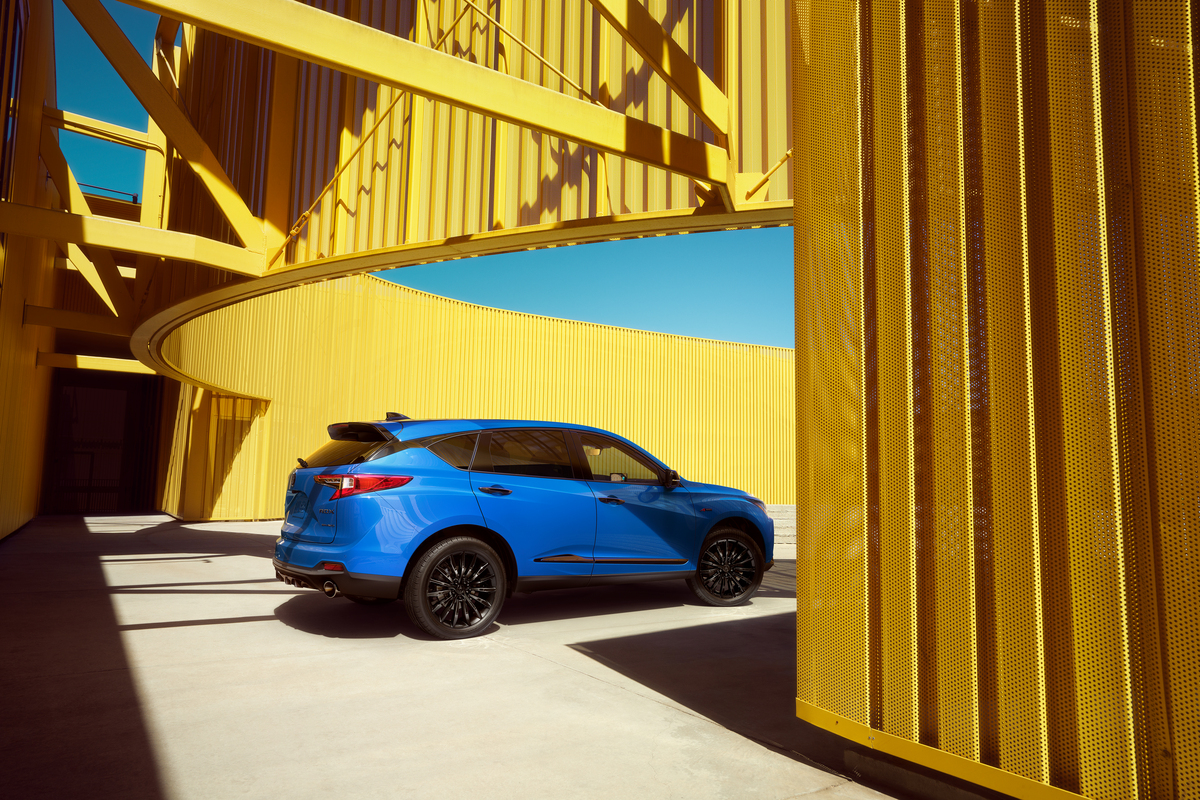
2022 Acura RDX

By Andy Stonehouse

Properly equipped for the winter, which we have an abundance of in Colorado, even the fanciest import sports SUV or sedan makes sense. Smaller, stylish and still speedy, the five-passenger Acura RDX offers great looks and excellent performance.

That was the much happier experience I had with a 2022 edition of Acura’s RDX, a one-size-smaller rendition of the ever-popular MDX, which was delivered, in the winter, with a set of high-performance winter tires (amazingly, this is a rarity, even as my travels take me into a high-altitude climate where I have literally been on traction-challenged ski trips weekly between October and early May). I cannot stress how much that amplified the driving experience and the sense of security, especially as it was the fancier A-Spec Advance Package edition of the vehicle.

2022 Acura

After driving a reasonably similar 2022 Lexus NX and a larger RX sandwiched around the Acura, I feel confident in saying that it’s probably exactly the vehicle I might invest in, if my circumstances called for a flashy, rock-solid and speedy five-passenger SUV. It’s not so tall and gigantic that you can’t reach up to brush snow off the roof, it’s got tons of visual appeal and its 272-horsepower 2.0-liter turbo setup pretty much blew away the NX in every circumstance.

I also got to enjoy Acura’s “super-handling” all-wheel-drive system and its active torque vectoring during snowy outings and then again on a very busy trip to Loveland Ski Area, on the Continental Divide. Both circumstances showed the Ohio-assembled, $52,845 vehicle to be the right size and the right power for the job.

Your feelings on the Acura’s very quiet but hyperstyled cockpit and its overly busy center stack could be an issue, however. Things are still focused around a giant drive mode knob that either lightens the throttle for Snow or apparently throws you into hyperspace in Sport, plus still-curious vertical shift buttons and a broad display screen controlled by a wide, slightly weird touchpad. Unlike most other manufacturers, its traffic data was also 100 percent accurate between the tunnel and Idaho Springs.

2022 Acura RDX

The A-Spec rendition gets more dark trim around the starburst-styled grille, window frames and body panels, plus beautiful multi-spoke 20-inch wheels, and its seats are even sportier than the standard model, with suede inserts and pretty aggressive bolstering. In the back, slightly silly oversized chrome exhaust ports convey the RDX’s somewhat boisterous, sporty character; the seven-lens jewel eye LED headlamps are an equally pleasant (and bright) touch.

I mostly liked that fact that RDX’s mass was never overwhelming or made it feel cumbersome, either on icy surfaces or while running up that horsepower on dry roads. The 10-speed automatic transmission can be pretty actively engaged via paddle shifters, and steering feel and braking capabilities are both accurate and effective.

The 2022 model included the very tangible suspension and dynamics system upgrades, plus wireless Apple CarPlay and Android Auto and built-in Amazon Alexa.

Sí: RDX offers a right-sized mix of power, sportiness and versatility, without the mass and mess of large SUVs.

No: That center stack design is a whole lot to take in, for limited real-world usefulness. But if you like knobs, Acura’s knobs are as ornate as they come.

Andy Stonehouse is a guest contributor to Latino Traffic Report and a freelance automotive journalist based in Lakewood, Colorado. All photos are stock, not as-tested.

SUV Review: 2021 Kia Seltos

 Kia, Reviews  Comments Off on SUV Review: 2021 Kia Seltos
Dec 312021
 

Like the ever-expanding small sport utility vehicle (SUV) segment, Kia’s SUV lineup grew a bit larger in 2021 with the introduction of the Seltos, the middle sibling between the Soul and Sportage models. Latino Traffic Report recently test drove the 2021 Seltos EX with all-wheel drive (AWD) and found that it’s much more than a triplet, it’s a true individual.

Available in five trims, the as-tested EX also sits in the middle of the Seltos lineup. The all-new model bears a distinct exterior, holding onto the tiger nose grille, but its headlamp design could get it mistaken for a Ford, at first glance. Although the test model did not include it, the optional two-tone roof would have individualized the Seltos a bit more.

The advantage of a smaller SUV is improved fuel economy and the Seltos does have an impressive EPA estimated fuel economy of 27 miles per gallon (mpg) in the city and 31 mpg on the highway.  

It’s achieved with a powertrain that includes a 2.0-liter four-cylinder MPI engine producing 146 horsepower and 132 lb.–ft. of torque, matched to an Intelligent Variable Transmission. It averaged 32.2 mpg on the week-long test drive.  A 1.6-liter Turbo GDI engine is available on other trims. Three drive modes, Normal, Eco, Sport, also help maximize the fuel economy and performance.

Inside, the Seltos fluctuates between plain and flashy. The 3.5-inch gauge cluster displays information in an understated black and white, but the stereo includes molded speaker covers in an interesting fractal pattern, heated front seats in a black Sofino leatherette and cloth combination, an eight-inch touchscreen compatible to Apple Car Play or Android Auto, and steering wheel-mounted controls. XM satellite radio, however, was missing. The SX trim adds mood lighting that changes color and intensity based on volume level.

As the name implies, utility is required for an SUV and the Seltos offers 60/40

split rear seats that fold flat as well as recline. Enhanced by a dual-level cargo floor, cargo room reaches 62.8 cubic feet.

The EX trim not only brings AWD for enhanced on-road confidence, it also includes a larger list of standard features, especially on the safety side, like the blind spot collision warning and avoidance assist, rear cross traffic alert (a nice complement to the standard forward collision warning), and a rear seat reminder that alerts owners to check for valuables in the rear seat before exiting the car. Other options included on the test model were a power sunroof, a smart key with remote start, a wireless phone charger, and 17-inch alloy wheels with a striking machine finish.

Starting price on the 2021 Seltos is $23,110. The as-tested price came to $26,885.

Sí: The Seltos offers good fuel efficiency and utility.

No: The display is plain and a blind spot monitor is not standard equipment on all trim levels.

Premium SUV Review: 2021 Lincoln Nautilus

 Lincoln  Comments Off on Premium SUV Review: 2021 Lincoln Nautilus
Dec 222021


All new for 2021, the Lincoln Nautilus sports a more refined exterior matched to a plush interior that doesn’t skimp on bells and whistles. Latino Traffic Report recently tested the 2021 Nautilus Reserve with All Wheel Drive (AWD). Part of the Lincoln family, this compact premium SUV lived up to and in some instances surpassed expectations.

Like its siblings, the Nautilus offers a plush cabin, the Ceramic Pearl exterior matched to a slate leather interior, with the requisite heated and cooled seating, a heated and powered tilt/telescopic steering wheel, dual zone climate control, Wifi capability, and a blind spot monitor. But it also added fancier features like heated rear seats, brushed aluminum accents Lincoln Connect with a 4G modem, a panoramic sunroof, and a massage function for the front seats that contributes to what Lincoln describes as a “sanctuary refined.”

The Reserve equipment group added a 360-degree camera, the cargo utility package, adaptive cruise control with lane centering, phone as key, and adaptive pixel LED headlamps, among other features, as well as an additional $9,695 to the price. The as-tested MSRP came to $67,335.

The new SYNC 4 voice activated infotainment system with integrated navigation makes its Lincoln debut on the Nautilus, as well as the 13.2-inch horizontal center stack screen. Programming radio and XM/Sirius presets, 20 total during the test drive, proved simple and intuitive as was folding the rear seats to expose 68.8 cubic feet of cargo room. The adaptive cruise control, however, was less so.

Another less than impressive factor about the Nautilus is its fuel economy. The EPA estimated city/highway miles per gallon (mpg) is 19/25, respectively. Powered by the available 2.7-liter twin turbo V6 with 335 horsepower and 380 lb.-ft. of torque and matched to an eight-speed transmission, the as-tested model achieved an average 22 mpg, notwithstanding the sharp stop/start function. The Comfort, Normal and Sport modes improved its performance but perhaps an Eco mode could have helped stretch its fuel economy. A 2.0-liter turbocharged four-cylinder is the standard engine.

For those with the funds to consider an SUV in the premium segment but with fewer passenger and cargo needs, the Nautilus should be included on the shopping list.

Sí: The all-new Nautilus dons a handsome exterior with a plush interior replete with bells and whistles.

No: Its fuel economy could be better.


Hybrid Review: 2021 Volvo XC90 and XC60

 Reviews, Volvo  Comments Off on Hybrid Review: 2021 Volvo XC90 and XC60
Nov 302021
 
Volvo Cars XC90 Recharge
Volvo XC60 Recharge T8 AWD.

By Andy Stonehouse

After an exciting time in the sizeable Volvo V90 Wagon last fall, I had expected the real, actual SUV version of Volvo’s full-size automobile category to seem impossibly huge, ponderous, and disconnected—kind of like a Swedish Chevy Tahoe. This was not the case with the XC90, except it also was. It’s smaller sibling, the XC60, was more fun to drive.

Volvo’s Flagship SUV, the XC90

XC90 Recharge Plug-In Hybrid

XC90 Plug-In Hybrid Inscription T8 – Seat Configuration

The XC90 is indeed a long and impressively styled and sculpted vehicle, with marvelous details and a very striking set of optional 21-inch glossy wheels to tie it all together. From the outside, it’s a little more obvious that it contains three comfortable rows of six or seven seats where the passengers at the very back get leg room, cargo bins and full amenities.

The newer XC90 T8 Recharge, the 400-horsepower plug-in electric hybrid version of the SUV, belies its moderately grand scale when planted in the driver’s seat. The ride height is more equivalent to a small SUV from other brands, while the cabin does feel broader and more open thanks to the extra head space.

As for that ultra-fancy Recharge hybrid system—my Inscription-level T8 started at $69,750 but was rounded up to a slightly gasp-inducing $81,690 with a gigantic list of options including a $3,200 Bowers and Wilkins premium sound system—well, you get what you pay for, for the most part, though impressive mileage you do not and will not get.

Volvo has emphasized pure power here and the 400 horsepower and 472 lb.–ft. of torque are more Porsche-like, at least on paper, especially with just a 2.0-liter as the main gasoline power source—turbocharged and supercharged to make 313 horses on its own, before the electric boost kicks in.

What I did notice more than anything, besides a pretty mediocre 24.2 overall MPG (it’s rated at 27 combined highway and city MPG by the EPA), was a lot of odd noises, gurgles, inconsistent power delivery and an operating experience that clearly was going to take some getting used to. Even the Orefors crystal gear shifter knob required multiple taps forward or backward to officially get into gear; the learning curve there was a little steep.

Cruising along in the XC90 was no problem, though the gas/electric power handoffs were a little jagged. Properly charged, in warm weather, with the wind blowing the right direction, you are said to have a full … 18 miles of all-electric range?

That’s disappointing, to say the least, especially since it’s such a classy and dignified vehicle, with razor-sharp suspension. It’s stunningly outfitted in leather seating, a fantastic stereo and hand-stitched console, and dash and door inserts that are even more beautiful than in the V90.

The vertically-oriented Sensus navigation/touchscreen system used to seem enormous before Ram started putting full flatscreen TVs aboard their trucks. Volvo’s is easy to use, with a purist simplicity embodied by one knob.

The XC90’s Spritely Sibling, the XC60

Volvo XC60 Recharge

If you’d like a hybrid experience that actually delivers, the one-size smaller XC60 Recharge, base priced at $61,000 and tested at $71,340, channels that very same powertrain into a more sprightly, responsive and semi-decent mileage kind of situation.

Volvo XC60 Recharge T8 IP display.

Besides the slightly hovercraft-styled reality of the vehicle’s four-corner air suspension system, which set itself down on top of curbs when I parked a couple of times, the 60 seems like a more practical use of the electrified platform. That air system is also helpful if you do want to go lightly off-roading, as it will give you significant lift when you want it.

It’s still 400 horsepower, it’s still got just about 19 miles of full-electric range, but I found it easier to push the mileage into the 30-MPG range, depending on how hard you drive it.

All that electric boost shows up more tangibly here and adds extra oomph to what I believe is one of the most pleasant crossovers of its size category— like the 90, it’s super stylish, comfortable and still utilitarian, with a little less of the pure mass.

It’s also more devoid of the shudder, the ambiguity and the disconnected feeling as the hybrid shifts and blends between electric kick and regular gas-engine wallop.

Design is fantastic, from its ultra-anatomical, perforated leather seats and the cream-colored cabin. The dash is low and flat and the A-pillars thin, though the boxy, oversized side mirrors can get in the way of some visibility, and rear headrests can be automatically dropped to provide clearer rear vision.

Rear seating will still accommodate most passengers, though the cabin is a bit more plain back there, with B-pillar mounted air conditioning and heating vents. You’ll also find reasonable storage space (63.3 cubic feet, total), though the under-deck space is largely used up by batteries and the air bottles for the optional lift system.    

Sí: One of the classiest, most attractive and least gawd-awful-gigantic full-size SUVs around, loaded with technology, and simply wonderful to just sit aboard. The kind of car you wish you would get when you grow up.

No: Volvo’s ambitious and aggressive move to an all-electric fleet might start with hybrids, but an almost $82,000 hybrid that gets 24 MPG isn’t impressing anyone.

Andy Stonehouse is a guest contributor to Latino Traffic Report and a freelance automotive journalist based in Golden, Colorado. All photos are stock, not as-tested.

SUV Review: 2021 Land Rover Defender

 Land Rover, Reviews  Comments Off on SUV Review: 2021 Land Rover Defender
Oct 072021
 

By Andy Stonehouse

The highly-anticipated 2020 (now 2021) Land Rover Defender, the uber-stylized, virtually unstoppable, retro-futuristic reinvention of Land Rover’s classic-looking off-roader, is quite the vehicle, in many ways. There hasn’t been a Defender in North America since 1997, owing to domestic safety rules, so this is indeed a big reintroduction.

While I had a joyous experience in the $71,025 Defender 110 SE model, the legion of hardcore, old-school Land Rover fanatics will either love or recoil in horror from the new, Slovakian-built Defender’s very striking mix of futuristic design and super-classic elements.

Like the very first Land Rovers going back to the late 1940s, this new model has decided that boxy is better and the rear cabin of the extended-wheelbase (119-inch) 110 model integrates that retro, safari-proven style with functional side skylights and an optional, ultra-classic white contrast roof. There’s also a peculiar, body-colored panel inserted in the otherwise black-on-black windows in the rear (which serves as the mounting plate for roof racks and such); side mirrors are tiny boxes, and the rear brake lamps look like they come out of a 12-year-old kid’s Minecraft session.

The 110 model can be ordered in five- or seven-passenger seating arrangements—mine subbed in a dedicated cargo area with the most rugged plastic floor and seatback plating I’ve ever seen (an effect repeated on its hood panels). Later this year, you will also be able to order the shorter Defender 90 model; all Defenders can be customized with a gajillion accessories, e.g.  roof racks, gear carriers, spare wheel covers, portable rinse systems and scuff plates.

I literally beat the hell out the Defender 110 during the test drive, engaging all of its ultra-sophisticated electronic off-road controls and easing up and down steep, rocky, sandy and snow-covered slopes, without a single problem. They’re all controlled by a new, fantastic center console (featuring an upright gear lever kind of like a joystick) that is entirely dark with the power off, but lights up to allow you access to easily control everything from terrain and throttle/braking response to the vehicle’s self-guided crawl mode. A broad video screen offers feedback on 4×4 settings, with innovative around-view cameras to help with safer navigation in sketchy spots. It’s also got a new wading mode to safely glide through up to 34 inches of water.

There are two choices of power for those various models, including a 296-horsepower turbocharged four-cylinder and the very impressive 395-horsepower, mild hybrid electric vehicle inline-six cylinder engine. Mine had the latter and its 48-volt integrated supercharger turns what is a lot of metal into a box that will hit 60 mph in 5.8 seconds, and absolutely gallop up mountain passes. A very slow cruise got me mileage in the mid-20s, but I would expect the 19 combined MPG the EPA sticker suggests.

Si: Undoubtedly one of the most capable off-road vehicles in the world, it will offer assistance to other brands with extra, semi-hybrid power that helps it boogie, uphill.

No: It’s weird as hell, in a lot of ways, and the looks and design are definitely polarizing. The interior also looks more like a science experiment than a passenger vehicle.

Andy Stonehouse is a guest contributor to Latino Traffic Report and a freelance automotive journalist based in Golden, Colorado. All photos are stock, not as-tested.

SUV Review: Ford Expedition

 Ford, Reviews  Comments Off on SUV Review: Ford Expedition
Sep 222021
 
Expedition Premium
Expedition Max King Ranch

As sport utility vehicles (SUVs) grow, so do their price tags so that even the base model of a full-size SUV can produce a bit of sticker shock.  With a starting price above $50,000, the Ford Expedition is no exception.

Redesigned in 2018 (it’ll be refreshed for 2022), the Expedition continues to serve buyers with the need for transporting multiple passengers, lots of cargo, and towing. Latino Traffic Report recently tested the two highest end models of this fancy workaholic, the Expedition Platinum and extended length Max.

The Expedition

Regardless of trim level, all Expeditions benefitted from a new exterior design that gave them a more refined look in 2018. Three years later, the fourth generation Expedition still showcases a 3.5-liter EcoBoost engine and ten-speed automatic transmission that produce up to 375 horsepower and 470 ft.–lbs. of torque with best-in-class maximum towing capability of 9,300 pounds.

It has an EPA estimated fuel economy of 17 miles per gallon (mpg) in the city and 23 on the highway. The aluminum-alloy body, redesigned high-strength steel frame, and stop-start technology help stretch fuel further. The extended version adds 11.9 inches in length but loses a couple mpgs with a city/highway EPA estimated fuel economy of 16/21 mpg.

Flexible seating and storage solutions include second-row tip-and-slide seating, standard on all models, that provide easy access to the third row.

Improved utility on the all-new Expedition comes with the class-exclusive Pro Trailer Backup Assist camera that helps drivers maneuver with confidence when backing up to a trailer.

Standard safety features include a perimeter alarm, the SOS post-crash alert, traction control, and a blind spot monitor with cross-traffic alert, lane keeping assist, pre-collision warning, and automatic high beams as part of Ford’s Co-Pilot 360 technology suite.

Platinum 4X2

Fully loaded with technology and otherwise optional features, the Platinum trim level also improves on aesthetics with satin chrome scuff plates, ivory leather seats, and body color door handles.

As a 4×2 configuration, the test model was meant to stay on the road and as such, provided a comfy, quiet ride ensconced in a plush interior. Ford sets the bar regarding seating comfort, in LTR’s experience.

Not only were the front seats heated but so were the second row. The front seats, however, were also cooled or ventilated. The rear seats deployed easily with the push of a button as did the hands free liftgate. Both test models offered seating for seven with captain’s chairs in the second row rather than a bench.

Maneuvering such a large vehicle requires extra technology like a 360-degree camera when in reverse with sensors to make sure to avoid people and objects. For the smaller statured, power running boards make getting in and out of the vehicle much smoother and adjustable pedals improved driver confidence and safety.

A panoramic sunroof on the test model and a hotspot with wireless phone charging included on both, added luxury and convenience.

The Premium averaged 20.4 mpg on the weeklong test drive.

Built at Kentucky Truck Plant in Louisville, Kentucky, pricing on the 2021 Expedition starts at $52,290 with destination fees. The as-tested price came to $75,925 with 22-inch wheels and second-row buckets seats adding $595.

King Ranch 4×4

Not only is the Expedition Max longer than other Expeditions, the test model came in one of the most successful and plush trims that Ford offers, the King Ranch. Named for the famed ranch in Kingsville, Texas, purchasing this trim rewards the buyer with Del Rio leather seating and accents that bear the King Ranch logo.

The test model swapped a panoramic roof for the roof rack found on the Premium and added a ten-way driver and passenger memory seat.

While max towing on the King Ranch can reach 9,000 lbs., a little less than its shorter sibling, its added length expanded cargo room for a maximum of 121.5 cubic feet.

The test modal also lost a bit of fuel efficiency due to its size, it averaging 17.9 mpg.

The main feature on the King Ranch that sets apart, however, really boils down to its interior. There’s more plastic included than in the past but the leather seating, with saddlebags on the seat backs for added storage, achieves quite a high standard in the segment.

The as-tested price for the King Ranch came to $81,680 with an added $1,570 for its 22-inch wheels and heavy-duty trailer tow package.
Sí: Both test models offered what buyers would expect in a large SUV, particularly at this price point, lots of luxury, comfort, and convenience.

No: The infotainment system didn’t offer enough presets and the start-stop fuel saving system was abrupt.