
Nissan Titan XD Single Cab
Based in the Lone Star State, home to the top truck market in the country, the Latino Traffic Report (LTR) team appreciates a nice pickup. A voting member of the Texas Auto Writers Association (TAWA), LTR’s editor also helps choose the Truck of Texas each year—the Ford F-150 is the current winner. Each year we offer an overview of the trucks we test. Here’s the list for 2018.
GMC Canyon Denali

Denali doesn’t just refer to a mountain in Alaska. It’s also the name of GMC’s top-of-the-line trim and as such, expectations can be high.
 GMC returned to the midsize truck market with the 2015 Canyon. It added a diesel engine in 2016 and the Denali trim for 2017. LTR recently tested the 2018 Canyon Denali Crew Cab.
On the outside, a unique chrome grille and 20-inch aluminum wheels distinguish the Canyon Denali. Though they were a nice idea, the standard chrome running boards were unnecessary considering that the Canyon sits lower than a half-ton. All Canyon’s include convenience features like a sidestep in the bumper and a locking tailgate.
 Fancy features inside the test model included leather seating with heated and cooled front seats, a leather-wrapped steering wheel, a Bose stereo system, a 4G LTE WiFi hotspot, the GMC Intellilink infotainment system with navigation, and an eight-inch touchscreen.
Capability on the truck came from the 2.8-liter Duramax turbo diesel engine with 181 horsepower and 369 lb.–ft. of torque, matched to a six-speed automatic transmission. This powertrain has a maximum tow rating of 7,700 lbs. and during the test; the 5.2-foot bed proved to be the right size to carry a lawnmower that needed repair. A 2.5-liter inline four-cylinder is the base engine and a 3.6-liter V6 and six-speed manual transmission are also available.
Few trucks can claim bragging rights for fuel economy but the Canyon’s diesel powertrain helps enhance its performance. The two-wheel-drive (2WD) model offers a segment best fuel economy of 31 miles per gallon (mpg) on the highway, while the four-wheel-drive (4WD) has an EPA estimated city/highway rating of 20/29 mpg. The 4WD test model achieved a city/highway average fuel economy of 21/25.5 mpg.
GM safety features included signature tech like the rear seat reminder—it chimes when the ignition’s turned off to remind the driver to check the rear seat—Onstar, and Teen Driver. But the lack of a blind spot warning system was a noticeable exclusion, particularly on a Denali.
Pricing for the 2018 Canyon starts at $22,095. The as-tested price of $48,190 included options like the engine and transmission that cost more than $4,000.

Toyota Tundra TRD Pro*

Hecho en San Antonio, Texas, the Toyota Tundra comes in more than four-dozen possible configurations. LTR tested the Tundra Limited with the TRD Pro 4×4 package built for the off-road enthusiast. For 2018, the TRD Sport Package gets new distinctive exterior design cues including a body-color surround for the honeycomb-style grille, 20-inch silver-painted aluminum alloy wheels with black accents, and the TRD Pro bedside graphic.
When it comes to functionality, the test Tundra had a towing capacity of up to 9,800 pounds and payload capacity of up to 1,560 pounds. During the weeklong test, the TRD Pro exhibited that capacity by helping out Cine Las Americas during the nonprofit’s annual film festival, and delivering a truckload of donated Dos Equis. Maximum towing and payload on the Tundra when properly equipped can reach 10,200 and 1,730 pounds, respectively.
All Tundra’s are powered by either of two V8 engines. The test model came with the 5.7-liter i-Force V8 engine, with 381 horsepower and 401 lb.–ft. of torque matched to a six speed automatic transmission. It had an EPA estimated fuel rating of 13 mpg in the city and 17 mpg on the highway. It averaged 14.7 mpg during the weeklong test.
 While most Tundras come with three cab styles and three bed sizes, the TRD Pro is available only in Double Cab and Crew Max models. LTR tested the latter matched to the shorter 5.5-foot bed.
The test drive remained on road, but the TRD Pro did demonstrate its off-road capability at last year’s TAWA Truck Rodeo. Tundra 4X4 models use the electronically controlled 4WDemand part-time 4WD system with 4×2, 4×4 Hi, and 4×4 Lo ranges.
 For added climbing ability, the TRD Pro sits two-inches higher than its siblings and lacks running boards. While that enhances ground clearance, it can be hard to climb onboard, especially for the vertically challenged.
All Tundra models come standard with a backup camera, essential equipment on a truck, and Toyota Star Safety is now standard for 2018. The test model added a blind spot monitor and parking sensor as part of the Entune Premium package ($785).
Pricing for the 2018 Tundra starts at $35,395. The as-tested pricing came to $51,589.
RAM 1500 Lone Star

Recognizing the top position that Texas holds in national truck sales, Ram created the Lone Star package in 2002, specifically for the Texas market. Not surprisingly, it’s become the top-selling Ram model in Texas and the Ram 1500 earned the Truck of Texas title for 2013 and 2014 from TAWA.
With eleven possible models, the Lone Star sits in the middle of the lineup along with the Big  Horn, so that it includes additional features beyond its distinctive badging, like dual-zone climate control, a front and rear parking sensor, a 60/40-split folding rear bench seat with underseat storage, and fold-flat load floor storage.
The test model, Ram 1500 SLT 4×2, also included welcome features like a rearview camera (standard on all 2018 Rams), and Uconnect infotainment and GPS navigation with an 8.4-inch touchscreen ($795).
Powered by the 5.7-liter Hemi V8 engine, with 395 horsepower and 410 lb.–ft. of torque, the Ram has an estimated EPA estimated city/highway fuel  economy of 15/22 mpg. It achieved an average fuel economy of 20.3 mpg during the weeklong test drive. The Hemi and eight-speed transmission on the test model added around $2,000 to the price. A 3.0-liter EcoDiesel V6 and 3.6-liter V6 are also available.
Some folks prefer an open bed on a truck, others like a lid. The test model came with the latter, specifically a three-fold tonneau cover ($595) to shield the 5.7-foot bed. It proved useful while moving my nephew to San Antonio for the summer. The load included cargo that presented a flight risk, even if strapped down, so while the tonneau may limit cargo height, it was perfect for our needs and easy to maneuver. The bed also included the innovative Ram Box Cargo Management System ($1,295).
Towing and payload capacity for the test model topped out at 10,330 and 1,700 lbs., respectively.
While leather seats may reflect a premium status, cloth seats can make more sense on a truck, plus the standard cloth seats on the Lone Star showed some attention to detail.
With a Ram redesign on the horizon for 2019, there’s still time to grab a Ram with the current look, particularly for fans of the crosshair grille.
Pricing for the 2018 Ram starts at $27,990. The as-tested pricing came to $45,760.

Nissan Titan XD Single Cab**

Blazing a new trail in the truck market, Nissan positioned its Titan XD (all-new for 2016) between a half-ton and super duty. It did so by giving it more capability by virtue of its 5.0-liter V8 Cummins turbo diesel engine that produces 310 horsepower and 555 lb.-ft. of torque. The move so impressed TAWA members that it named it the 2016 Truck of Texas. For 2018, a factory-authorized suspension lift kit will be offered on select models of the TITAN and TITAN XD.
 The Cummins is matched to a six-speed automatic transmission but a seven-speed automatic is available on the 5.6-liter V8. The unique position the XD holds also excludes it from fuel economy ratings by the EPA but on the test drive, it averaged 14.3 mpg.
Available in three cab configurations, Single, Crew, or King, the Single is the newest and was featured on the test model, as well as an eight-foot bed, one of two available bed sizes on the Titan. Built to appeal to entrepreneurs, the Single Cab earned the TAWA 2017 Commercial Truck of Texas title in 2016. It has a payload capacity of 2,910 lbs., a maximum towing capacity of 12,640 lbs. (when properly equipped), and a super dampened tailgate that practically lifts with one finger.
 The understated interior on the test model included cloth seats, a tiny display for the AM/FM/CD stereo. As a single cab, interior storage was limited but there was seat back and underseat storage in the rear.
The test model, Titan XD SV, was also equipped with 4WD, remote keyless entry with push button start, plus the SV Comfort and Convenience Package ($1,360) that added a rear view monitor and parking sensors, dual air conditioning, a blind spot warning system with rear cross traffic alert, running boards, and 20-inch alloy wheels.
All Titan XDs are covered by Nissan’s “America’s Best Truck Warranty” featuring bumper-to-bumper coverage for five-years/100,000-miles, whichever comes first.
Pricing for the 2018 Titan XD Single Cab starts at $33,335. The as-tested pricing came to $46,625.

With redesigns on the way for the Ram, Chevrolet Silverado, and GMC Sierra, 2019 will be a model year for trucks. A new Truck of Texas could be in the mix.
Note: All prices include destination fees.
*Toyota recently announced separate safety recalls in the United States of approximately 8,800 Model Year 2017 Tundra and approximately 65,000 Model Year 2018 Sequoia and Tundra vehicles. For more information, go to toyota.com/recall and enter the Vehicle Identification Number (VIN). Safety Recall inquiry by individual VIN is also available at the NHTSA site: nhtsa.gov/recalls.
**Nissan North America, Inc. (Nissan) is recalling certain 2016-2018 Nissan Titan, 2016 and 2018 Nissan Titan XD vehicles. The recall is expected to begin on June 16, 2018. Owners may contact Nissan customer service at 1-800-867-7669 or NHTSA at 1-888-327-4236 (TTY 1-800-424-9153), or go to www.safercar.gov.
Click here to find past recall notices posted by LTR.


 The test model came in Celeste Blu on the outside, one of fifteen special shades, with similar toned accents on the inside, and for $250 more, Ivory leather-trimmed bucket seats. The combination gave it an upscale feel.
 Optional equipment added as part of the Customer Preferred Package, included GPS Navigation ($495). One option on the test model that I wouldn’t go for was the six-speed automatic transmission ($695). The five-speed manual would have certainly ramped-up this car’s performance and fun factor.


 The navigation system was relegated to Apple Car Play, which worked well but does eat up data. Creature comforts included AM/FM/MP3 with a seven-inch touchscreen, push button start, Bluetooth wireless technology, leather seats with cloth inserts, a leather wrapped steering wheel, and the UVO infotainment system.
 While a blind spot monitor and rear cross traffic alert systems were not included on the test model, they are available on the Exclaim and Plus trim levels. Standard safety features on all models include electronic stability control and Hill Start Assist.
 I love a manual transmission, which is why I had to include this model, but it had me stymied over listing it under Cars for Girls or Cars for Moms on the Go but since most moms have their hands full, I decided that the enterprising millennial interested in learning a new skill might find this wagon appealing.
 I tested the 2017 VW Golf SportWagen TSI S with a five-speed manual transmission matched to a peppy 1.8-liter four-cylinder turbocharged engine with 170 horsepower and 199 lb.–ft. of torque. The manual transmission added tons of fun plus it helped with fuel efficiency. The EPA estimated city/highway fuel economy is 25/35 mpg, the best of all three trim levels. I achieved an average of 32.8 mpg at the end of a week.

 It also came with a few safety features like a rearview camera, Automatic Post-Collision Braking and Intelligent Crash Response systems.

 Redesigned for 2017, Honda gave the Ridgeline a truck profile, replacing the previous side panel with one that has an integrated truss, while retaining its unibody construction and smooth ride. Additionally, every Ridgeline has four doors and seating for five.
 The test model included Ridgeline’s Intelligent Traction Management System that enhances off-road capability with drive modes for different conditions—Normal, Snow, Mud and Sand on the AWD. The 2WD includes Normal and Snow. Towing on the AWD maxes out at 5,000 lbs.
 eight-inch Display Audio touchscreen with Android Auto and Apple CarPlay compatibility, a new generation of the Honda Satellite-Linked Navigation System, Smart Entry, a power sliding rear window, and Remote Engine Start. Creature comforts included heated seats, adaptive cruise control, and a moonroof.

 Powered by a 3.5-liter V6 engine matched to an eight-speed automatic transmission, the Highlander has a city/highway EPA estimated fuel economy of 21/27 mpg. I averaged 20.4 mpg on the test drive. A 2.7-liter four-cylinder is the base engine.
 Safety features carry particular clout on a family vehicle. The Highlander includes its signature Star Safety System with traction control and anti-lock braking, plus a backup camera and Hill Start Assist Control. The test model also included a blind spot monitor with Rear Cross-Traffic Alert and rear parking sonar that are not offered on lower level trims.


 rsepower and 184 lbs.–ft. of torque, available as soon as the electric motor begins to turn, and a lithium high-voltage battery, it produces an electric range of approximately 114 miles when fully charged. The test model also included the Range Extender, a two-cylinder gasoline engine that helps alleviate range anxiety. It switches on once the battery is depleted to 6.5 percent state of charge and provides an additional range thanks to a larger fuel tank (2.4 gallons).
 onboard system, I had an estimated electric range of 130 miles, but that number dropped sharply within minutes of getting on the road. Still, I managed to power the car exclusively on electricity for the remaining four days of the test drive and avoiding gasoline was a welcome experience.
 Other creature comforts included automatic climate control, and Dynamic Cruise Control. The i3 did lack a blind spot monitor but it did have a rear parking camera and sensors.

 Available in a long-wheelbase version, for Latinas who really need legroom, as well as AWD, the test model I drove was the rear-wheel drive Q70 5.6 with the standard wheelbase and the Sport Package.
 Inside, I found more sexy features, starting with the curves on the binnacle brow (that overhang that shades the instrument cluster from the sun’s glare), or in this case, binnacle bra. Expected creature comforts at this price point, like leather seating throughout and heated and cooled seats in the front, dual-zone climate control, a heated, power tilt and telescopic steering wheel, navigation with traffic and weather information, an eight-inch infotainment screen, an around-view camera, and a Bose stereo, were included.
 While the test model came equipped with the Premium Package, it did add two more, rather pricey packages, to bring features like a blind spot monitor, intelligent cruise control, forward emergency braking to avoid a collision per the Technology Package, ($3,300). The Sport Package ($4,900) added sport suspension, magnesium paddle shifters, Bose Studio Surround 16-speaker premium audio system, among other features.
 Pricing for the 2017 Q70 starts at $51,295. The as-tested pricing came to $72,720.


 The new 1.4-liter inline four-cylinder turbo engine with 153 horses is matched to a six-speed manual or available six-speed automatic transmission (North America). I drove the automatic and earned an average 35 mpg. A diesel engine becomes available in the spring of 2017.
 five years), and a rearview camera. New available features include wireless phone charging, heated rear seats and heated, leather-wrapped steering wheel.
 Oddly, neither a sunroof nor leather seats are available.


 were also included in the gauge cluster, as well as a power moonroof.


 All three engines include the Active Eco System and Driver Mode Select with an Eco option to conserve gas. The EPA estimated fuel economy for the test model is 22 mpg in the city and 32 mpg on the highway. I averaged 31 mpg.


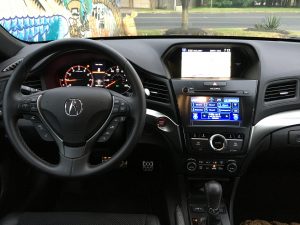 The sporty ILX gets its oomph from a 2.4-liter four-cylinder engine with 201 horsepower and 180 lb.–ft. of torque. Matched to an eight-speed dual-clutch transmission, the powertrain should achieve an EPA city/highway estimated fuel economy of 25/36 mpg. I averaged 29.9 mpg.
 lect technology to adjust ride and handling.
 features. The Tech Package added navigation, multi-view rear camera, and the Acura ELS AM/FM/CD sound system. Finally, the Acura Watch Plus Package completed the picture with adaptive cruise control, forward collision warning, and braking among other features.


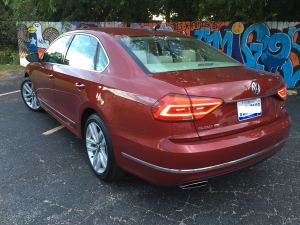


 Both also came with quattro all-wheel drive, but the sedan should manage to achieve one more mile per gallon in the city and highway, with an EPA estimated fuel economy of 24/33 mpg. I averaged 23.7 mpg with the Sedan and 21.4 mpg with the Cabriolet.

 M Satellite radio. The sedan also came with a panoramic sunroof.


 To show it means business, Lexus powers the GS F with a 5.0-liter V8 with 467 horses and 389 lb.–ft. of torque. It’s matched to an eight-speed Sport Direct Shift Automatic Transmission with steering wheel mounted paddle shifters.
 For better performance and handling, the GS F sits on a double-wishbone in the front and rear multi-link suspension. Lexus adds Brembo disc brakes and Active Sound Control, to increase throatiness and rumble to the engine and exhaust notes. Drive Mode Select control further enhances performance by giving the driver the following options—NORMAL, ECO, SPORT S, SPORT S+—while Torque Vectoring Differential helps the GS F hug the road.
 All new for 2016, improvements in 2017, like a new Linear Adaptive Variable Suspension, accentuate the positive, with more power and better responsiveness.


