Valerie Menard

Valerie Menard is a freelance writer and published author with 16 years of reporting about the auto industry for Latino publications.

Marquez and Pedrosa Fourth and Fifth in Tricky Qatar Grand Prix

 Noticias  Comments Off on Marquez and Pedrosa Fourth and Fifth in Tricky Qatar Grand Prix
Mar 282017


Honda had a brilliant start to the 2017 Moto3 Word Championship, taking the top five places at the end of a typically thrilling multi-rider battle. The top eight finishers passed the checkered flag separated by less than nine tenths of a second! Marc Marquez (Repsol Honda Team RC213V, #93) and Dani Pedrosa (Repsol Honda Team RC213V) finished tonight’s season-opening Qatar Grand Prix in fourth and fifth positions, just four tenths of a second apart at the finish line.

The race started 45 minutes later after the freakish desert weather that has dominated much of this weekend threatened to soak the track once again. A brief shower as riders lined up on the grid caused the nerve-wracking delay, but in the end none of that mattered as the world’s greatest riders laid on a battle royal under the floodlights. Then, as riders returned to their pits after the race, the heavens properly opened.

Marc Marquez

Reigning World Champion Marquez started the race from the front row of the grid but he never expected an easy race, because this is not one of his favorite racetracks. The night’s tricky conditions complicated matters further, with the track surface cooling rapidly and dew forming in some areas.

“I think we worked well over the weekend, and we had everything clear for today,” Marquez shared.  “Our plan was to use the harder front compound, but the chaotic situation with the rain and the continuous delays created many doubts. In the end we decided to go with the medium front, aiming to reduce the risk of crashing, but this turned out to be our biggest mistake of the weekend.”

The 24-year-old Spaniard was in the lead group from the very beginning, chasing early leader and rookie Johann Zarco (Yamaha), who crashed out after-one third distance, highlighting the delicate grip situation. In the later stages Marquez slipped back a few seconds to finish fourth, six seconds behind winner Maverick Vinales (Yamaha).

His issue was the cooling conditions that prompted him to change his front tire on the grid, from the usual hard compound to the medium compound, in the hope that this tire would retain its temperature more efficiently in the cool conditions. In fact Marquez used up

Dani Pedrosa

much of the tire’s performance in the first few laps, which meant he could not maintain his usual hard-charging style in the later laps.

“We were aware that we struggle a bit at this track, but as always we kept a positive attitude, as we also knew that if everything was in place, we could have fought for the podium or even the victory,” said Marquez.

Pedrosa had a great race, fighting his way through from the third row of the grid to move forward as the shortened 20-lap race went on. The 31-year-old former 125cc and 250cc World Champion also used the medium front and was happy with his performance at a track that has never been really kind to him. Like all the other riders, the Spaniard did superbly to maintain his focus in the run-up to the race, despite the delays.

In the final laps the main interest focused on Miguel Oliveira (Red Bull KTM Ajo KTM) who showed a fine turn of speed. After getting the better of Morbidelli’s team-mate Alex Marquez (Estrella Galicia 0,0 Marc VDS Kalex) the Portuguese closed the gap on Nakagami, but wasn’t quite close enough to attack on the final lap. Marquez finished a strong fifth, well clear of Luca Marini (Forward Team Kalex), who got to the checkered flag just two tenths ahead of impressive Moto2 rookie Fabio Quartararo (Pons HP 40 Kalex).

The MotoGP circus leaves Qatar tomorrow, making its way to Argentina for the second round of the 2017 MotoGP, Moto2 and Moto3 World Championships on April 9.

Premium SUV Review: 2017 Audi Q7

 Audi, Reviews  Comments Off on Premium SUV Review: 2017 Audi Q7
Mar 202017


Riding the wave of growing sport utility vehicle (SUV) sales, the premium SUV segment reported an increase in sales year to date by five percent, according to the Wall Street Journal. The segment is not the largest, but when you drop an average of $60K on a premium SUV, be prepared for lots of bells and whistles.

Latino Traffic Report recently drove the all-new 2017 Audi Q7 for a weeklong test drive. Its premium appointments inside stood out, but not all were standard and the extras did cost a pretty penny.

What sets an Audi apart in the segment is its performance heritage. The Q7 gets its power from a 3.0-liter V6 with 333 horses and 325 lb.–ft. of torque matched to an eight-speed Tiptronic transmission—hence the paddle shifters on the steering wheel. It’s also equipped with Audi’s quattro all-wheel drive system.

The EPA expected fuel economy is 19 miles per gallon (mpg) in the city and 25 mpg on the highway. I averaged 21.1 mpg.

Like most premium SUVs, the Q7 adheres to expectations, with plush leather seating, a leather-wrapped steering wheel, tri-zone automatic climate control, and a singular infotainment system, MMI—Audi’s is less intuitive than others, but I did like that it allowed for 48 different radio presets.

The test model also included red, white, and blue, interior lighting accent strips, a panoramic sunroof, heated and cooled seats in the front, and a power liftgate. What really distinguished Audi’s interior, besides the fit and finish, were features like a pop-up display above the center stack that displays navigation maps and other functions. With seating for seven, it has a convenient button to release the third-row bench to fold flat. The second row, was not automatic and therefore, a little less easy to deploy.

Unique safety features like  Audi pre-sense basic and pre-sense plus that help detect and mitigate a potential collision, were also included.As mentioned earlier, additional creature comforts came at a price.

The Prestige Package ($9,500) added 20-inch ten spoke wheels, the Bose 3D surround sound stereo system, navigation, and a heads up display on the windshield, Audi Connect Prime and Plus, Audi Connect Care, and my favorite safety features, a blind spot monitor and rear parking sensor. For $4,000, the Q7 amped up its ride and handling with an Adaptive Chassis Package that included air suspension and four-wheel steering. The Driver Assistance Package ($2,400) added adaptive cruise control, another of my favorite features, active lane assist, and traffic sign recognition. Finally, the Cold Weather Package ($500) included a heated steering wheel and heated rear seats.

Redesigned for 2017, the second-generation Q7 has a starting price of $55,750.The as-tested price came to $72,875.


Sí: The Audi Q7 lives up to its premium brand with sophisticated design, inside and out.

No: Upgrades to the Q7 can add up quickly.

FCA Recalls Certain 2017 Fiat 500X Models

 Recalls  Comments Off on FCA Recalls Certain 2017 Fiat 500X Models
Mar 172017
 

2017 Fiat 500X Trekking

Latino Traffic Report has learned that Chrysler (FCA US LLC) is recalling certain 2017 Fiat 500X vehicles. When the vehicle has a tire with low tire pressure, the tire pressure monitoring system (TPMS) warning light may not illuminate. As such, these vehicles fail to comply with the requirements of Federal Motor Vehicle Safety Standard (FMVSS) number 138, “Tire Pressure Monitoring Systems.”

Driving a vehicle with an underinflated tire may result in tire failure and increase the risk of a crash.

2017 Fiat 500X

Fiat will notify owners and dealers will update the instrument panel software, free of charge. The recall is expected to begin April 21, 2017. Owners may contact Chrysler customer service at 1-800-853-1403. Chrysler’s number for this recall is T16.

Owners may also contact the National Highway Traffic Safety Administration Vehicle Safety Hotline at 1-888-327-4236 (TTY 1-800-424-9153), or go to www.safercar.gov.

Super Sedans Improve Regular Commutes

 Features  Comments Off on Super Sedans Improve Regular Commutes
Mar 142017
 

Chevy Cruze

Available at all ends of the price spectrum, the ubiquitous sedan comes in an assortment of incarnations, from a comfortable, affordable commuter to a sumptuous performance machine. Here’s an overview of the sedans tested by Latino Traffic Report (LTR) and what makes them stand out in a crowded field.

Chevy Cruze

Redesigned in 2016, the Chevy Cruze compact sedan continues to compete in one of the toughest automotive segments by ramping up both its style and amenities.

For starters, the new version is larger and lighter, increasing its EPA estimated fuel economy to 30 miles per gallon (mpg) in the city and 40 mpg on the highway.

The new 1.4-liter inline four-cylinder turbo engine with 153 horses is matched to a six-speed manual or available six-speed automatic transmission (North America). I drove the automatic and earned an average 35 mpg. A diesel engine becomes available in the spring of 2017.

As mentioned, it comes with a healthy list of standard features including keyless entry, XM Satellite radio (three months), OnStar (six months), OnStar Basic Plan (five years), and a rearview camera. New available features include wireless phone charging, heated rear seats and heated, leather-wrapped steering wheel.

Happily, I drove the Premier or top-of-the-line model that included the available OnStar 4G LTE with Wi-Fi hotspot and keyless start plus all the above via the Enhanced Convenience Package ($865), as well as the Driver Convenience Package ($790) that added essentials like rear park assist, forward collision, rear cross traffic, and lane change alert with a blind zone warning. Oddly, neither a sunroof nor leather seats are available.

Still, the fit and finish inside this model was quite impressive, definitely a step up from the outgoing model.

The as-tested pricing for the Cruze Premier came to $26,045.


Toyota Camry

The Camry is a top seller among Latinos as well as the nation. It’s been a leader in the midsize segment for the last 14 years. So if it ain’t broke, perhaps the task for Toyota is just to make more versions? The LTR test drive featured the Camry SE Special Edition. While many manufacturers have joined the darkened trend for special editions, Toyota chose to go blue.

Powered by a 2.5-liter four-cylinder matched to six-speed automatic transmission, it should achieve an impressive EPA estimated city/highway fuel economy of 25/35 mpg. I averaged 26.3 mpg. A 3.5-liter V6 is available on other Camrys.

Toyota applied the Special Edition to the SE trim as it’s already distinguished by a sporty design, from the grille to the suspension. On the inside, the sport fabric Softex seats featured blue accent stitching and blue seat inserts. Blue accents were also included in the gauge cluster, as well as a power moonroof.

Specific technology on this trim included a Smart Key System and Qi wireless charging for compatible smart phones, enabling navigation from a smart phone.

Exclusive design features include a smoked treatment on the taillights and 18-inch alloy wheels in a machined finish and gloss black-painted accents. For a mere $525, the Camry also included a ramped up Entune premium audio with navigation, a seven-inch high-resolution touch screen with split-screen display, and a CD player.

While a redesigned 2018 version of the Camry is currently touring auto shows, there’s still time to grab the current generation.

The as-tested Camry Special Edition pricing came to $27,075.


Kia Optima

Kia ramped up the 2016 version of the Optima with a redesign, giving its top-selling nameplate a more refined exterior look, new technology, and creature comforts offered at the same starting price as the outgoing model. The 2017 model receives a few tweaks and upgraded trims.

Optima rear view camera with multiple angles.

There are three available four-cylinder engines to power the Optima, distributed among five trim levels. The test model, Optima SX Turbo, came equipped with 2.0-liter turbo-powered four-cylinder engine matched to a six-speed automatic transmission. A seven-speed dual clutch transmission is also available.

All three engines include the Active Eco System and Driver Mode Select with an Eco option to conserve gas. The EPA estimated fuel economy for the test model is 22 mpg in the city and 32 mpg on the highway. I averaged 31 mpg.

As a midsize sedan, Kia competes in a tough segment. It has an edge, however, with an exceptional bumper-to-bumper warranty (five years or 60,000 miles) and with a healthy list of standard features. Situated near the top of the line, second to the Optima SXL, the test model included extra technology and creature comforts. Standard features on the test model included dual-zone air conditioning, cruise control, AM/FM/MP3 audio unit with satellite radio, an eight-inch LCD rear-camera display, and Bluetooth.

Additionally, the test model added the SXT Premium Technology Package ($4,800) brought a slew of features like a panoramic sunroof, Harman Kardon Surround Sound system, heated and cooled front seats, Blind spot Detection and Rear Cross Traffic Alert.

The as-tested price for the Optima, built in West Point, GA, was $35,315.

Acura ILX

Considered a gateway to the Acura brand, the ILX is the most affordable Acura model available. The test model, ILX Tech Plus A-SPEC, however, included multiple packages that ramped up its appeal and price.
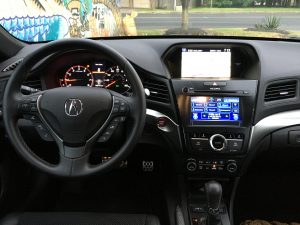
The sporty ILX gets its oomph from a 2.4-liter four-cylinder engine with 201 horsepower and 180 lb.–ft. of torque. Matched to an eight-speed dual-clutch transmission, the powertrain should achieve an EPA city/highway estimated fuel economy of 25/36 mpg. I averaged 29.9 mpg.

Expect to feel the road with the ILX which lacks adjustable drive mode select technology to adjust ride and handling.

With refreshed looks on the outside for 2016, including restyled front and rear fasciae, front grille, and rear LED combination lights, the A-SPEC package also added sporty side sill garnishes, a trunk spoiler, front fog lights, new 18-inch, ten-spoke machined alloy wheels, sport pedals, and sport seats with suede inserts.

As the name implied, the ILX Tech Plus A-SPEC was packed with packages that brought a long list of features starting with the Premium Package that included XM Satellite radio, a blind spot monitor and rear cross traffic monitor among other features. The Tech Package added navigation, multi-view rear camera, and the Acura ELS AM/FM/CD sound system. Finally, the Acura Watch Plus Package completed the picture with adaptive cruise control, forward collision warning, and braking among other features.

As tested pricing for the top-of-the-line ILX Tech Plus A-SPEC came to $35,810.


Volkswagen Passat

Passat 1.8T SE

With a base price of $23,260, the Passat is more affordable than expected for a European mid-size sedan, one that happens to be built at VW’s Chattanooga, TN plant. LTR tested two Passat trim levels, the sporty 1.8T SE with Technology and the SEL Premium.

Updated inside and out for 2016, the Passat remains understated but sophisticated in appearance.

Powered by the four-cylinder 1.8-liter turbocharged engine matched to a six-speed automatic transmission should help the Passat SE achieve an impressive EPA city/highway estimated fuel economy of 25/38 mpg. I averaged 27.4 mpg.

Passat SEL Premium

The more affordable trim level of the two I drove included important technology like the intelligent crash response system, but also comfort features like heated front seats and MIB II, the new generation of Volkswagen’s infotainment system, adaptive cruise control and a rearview camera for added convenience.
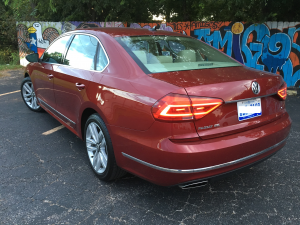
As the name implies the SEL Premium is the higher-end version of the Passat and replete with more bells and whistles that do come at a high price, nearly $10,000 more.

Powered by a 3.6-liter V6 and a six-speed transmission, it has an EPA city/highway estimated fuel economy of 20/28 mpg. I averaged 24.3 mpg.

It had heated front and rear leather seats, a Fender premium audio system, a power sunroof, parking sensor, and a blind spot monitor.

Both models had a massive truck with 15.9 cubic feet of storage and 60/40-split rear seat that easily deploys to expand cargo room inside.

As-tested pricing for the SE and SEL came to $28,195 and $37,655 respectively.


Audi A3

Audi A3 Sedan

Believe it or not, there’s actually an entry-level Audi and it’s called the A3. On this test for LTR, there were two models for review, the Sedan and the Cabriolet (convertible).

The Sedan offers three engine options and the Cabriolet two. Both test models shared the same one, a 2.0-liter inline four-cylinder engine that produced 220 horsepower and 258 lb.–ft. of torque matched to a six-speed S tronic transmission. Both also came with quattro all-wheel drive, but the sedan should manage to achieve one more mile per gallon in the city and highway, with an EPA estimated fuel economy of 24/33 mpg. I averaged 23.7 mpg with the Sedan and 21.4 mpg with the Cabriolet.

What the Cabriolet did excel at was fun, starting with the canvas top that deployed with the push of a button at speeds of up to 31 mph and, ideally, in 18 seconds—it took 24 seconds when I tried.

Audi A3 Cabriolet

Standard safety technology on all A3s includes, a rear view camera, and parking system. To get advanced systems like Audi Side Assist (blind spot warning) requires purchasing the Technology Package ($2,700), which also adds a CD/DVD player, Audi MMI touch, and navigation, among other features.

The A3 may be considered “entry level” but it’s still an Audi, and as such, standard creature comforts include dual-zone climate control, leather seating, and SiriusXM Satellite radio. The sedan also came with a panoramic sunroof.

Both added extra packages to get features like heated front seats, Audi advanced Key, and Audi music interface with iPod cable.

As tested pricing for the Sedan came to $41,325 and $46,500 for the Cabriolet.


Lexus GS F

Lexus’s new design DNA, including the signature spindle grille, signaled a new focus on sportiness. The manufacturer even created a special performance lineup under the F brand. New for 2016, the GS F performance sedan leaves little doubt that it’s a Lexus, particularly with its premium appointments on the inside, but its sportiness is certainly sets it apart.

Exterior design features get bolder on F models, including the fascia with race-inspired functional air inlets, triple-beam headlamps, low-slung wide stance, large brake calipers, carbon-fiber rear spoiler, and quad exhaust rear diffuser.

To show it means business, Lexus powers the GS F with a 5.0-liter V8 with 467 horses and 389 lb.–ft. of torque. It’s matched to an eight-speed Sport Direct Shift Automatic Transmission with steering wheel mounted paddle shifters.

Fuel economy will not be its strongest feature but it is respectable. The EPA estimated city/highway fuel economy is 16/24 mpg. I averaged 17.7 mpg.

For better performance and handling, the GS F sits on a double-wishbone in the front and rear multi-link suspension. Lexus adds Brembo disc brakes and Active Sound Control, to increase throatiness and rumble to the engine and exhaust notes. Drive Mode Select control further enhances performance by giving the driver the following options—NORMAL, ECO, SPORT S, SPORT S+—while Torque Vectoring Differential helps the GS F hug the road.

All new for 2016, improvements in 2017, like a new Linear Adaptive Variable Suspension, accentuate the positive, with more power and better responsiveness.

All this performance and power doesn’t come cheap. The as-tested pricing for the GS F was $87,175.


Chicago Auto Show 2017—New Trims and Special Editions

 Noticias  Comments Off on Chicago Auto Show 2017—New Trims and Special Editions
Feb 212017


Auto shows offer a peek at what consumers may expect to see on car lots soon or in the near future. The largest auto show in the country, the Chicago Auto Show, just wrapped up and during the media preview, attended by Latino Traffic Report, manufacturers revealed more choices for a diverse consumer market.

More than two years since the first Titan was unveiled, Nissan completes the tale of this groundbreaking pickup-with the intro of the King Cab or extended cab version of the 2017 Titan. Nissan VP Fred Diaz held a tailgate chat with journalists, expressing satisfaction with the King Cab and announcing that the Titan line-up is now complete.

Tailgate chat with Nissan VP Fred Diaz.

“The launch of the new King Cab body is the last step in a journey that began in December 2015 with the debut of the breakthrough TITAN XD, which continues to carve out a unique white space between competitors’ heavy-duty and half-ton trucks,” said Diaz, division vice president and general manager, North America Trucks and Light Commercial Vehicles, Nissan North America, Inc. “Now, with the addition of a half-ton TITAN, our new Endurance V8, three body configurations, three bed lengths and a range of grade levels and equipment packages, we’re covering nearly every segment in the personal and commercial full-size truck markets. Add to that the industry’s best five-year/100,000-mile bumper-to-bumper warranty and the TITAN family is even more compelling.”

Offered in 4×4 and 4×2 and on both the half-ton and XD versions of the Titan, the King Cab (not to be confused with the four-door Crew Cab) features wide opening rear-hinged doors for added convenience. Potential commercial truck users will appreciate a first-in-segment “rear seat delete” option that removes the rear seat, rear heater duct, and rear roof-mounted assist grips and adds a flat rear load floor and rear wall finisher with tie-down hooks.

Rogue One Star Wars Limited Edition

The Titan and Titan XD King Cabs should go on sale this spring.

Continuing to leverage the Rogue via its marketing alliance with LucasFilm. Ltd. and its latest blockbuster, Rogue One: A Star Wars Story, Nissan displayed the Rogue One Star Wars Limited Edition package featuring Star Wars badging on the kickplates, floor mats, and Rebel Alliance and Galactic Empire logos in cupholder inserts and interior accent lighting. Only available on a Rogue SV trim equipped with the Sun and Sound Touring Package makes it more accessible and unique, but not fancy. Nissan plans to produce only 5,400 with the package costing approximately $1,990 extra.

Finally, Nissan expanded its lineup of Midnight Edition vehicles, previously only available on the Maxima, introducing five new models in Chicago, namely the Sentra, Altima, Rogue, Murano and Pathfinder The trend of “darkened” accenting on vehicles appears to have its appeal as more and more brands introduce them. The black wheels, spoiler, mirror caps and available special floor mats with additional equipment added by model will set the new Midnight Editions apart.

Midnight Edition Nissan Rogue

“The six models offering Midnight Edition packages account for more than 75 percent of our U.S. sales, so we think they will find a receptive audience.” said Christian Meunier, senior vice president, Nissan Sales and Marketing and Operations, Nissan North America, Inc.; chairman, Nissan Canada.

On sale now, available exterior colors include Red Alert, Super Black, Aspen White, and Gun Metallic.

For drivers with special needs, Chrysler displayed a modified Pacifica with wheelchair access, part of its new partnership with a leader in aftermarket modifications for the disabled, BraunAbility. Included in the FCA US Automobility Program, the modified Pacifica will help ease the financial burden of drivers and passengers with physical challenges. Through this program, customers can be reimbursed for up to a maximum of $1,000 for out-of-pocket expenses to install qualifying adaptive driver or passenger equipment on a purchased or leased new Chrysler, Dodge, Jeep, Ram or FIAT vehicle.

Alex Fedorak introduces the Mitsubishi Outlander Sport Limited Edition.

Marking its centennial, Mitsubishi also introduced a Limited Edition of the Outlander Sport, its most popular vehicle. Positioned directly above the ES trim level or base model, it will include 18-inch wheels, a rearview camera, an aluminum-alloy fuel door, and high-intensity discharge headlights.

Interior details include black cloth seating, red accent stitching on the steering wheel, shift knob, and brake lever, aluminum-covered pedals, and heated front seats.

“A lot of things have happened over the course of the last 100 years,” said Alex Fedorak, public relations manager for Mitsubishi. “A lot of innovations, and I’m proud to say that we were one of those innovators along the way.”

The Outlander Sport Limited Edition will be in dealerships later this month for $21,995 and available through the end of the model year.

For more views and information about the vehicles featured at the Chicago Auto Show, go to http://www.chicagoautoshow.com.


Vehicle Launch: 2017 Honda CR-V and Civic Hatchback

 Launches  Comments Off on Vehicle Launch: 2017 Honda CR-V and Civic Hatchback
Feb 132017


The reasons why the CR-V and Civic have been top sellers for Honda are many. Offering families the versatility they need as well as value they seek explains how the CR-V became the best-selling SUV in America for the past 20 years, selling nearly four million models in the United States since it was introduced in 1997. For its part, the Civic offers an affordable and fuel-efficient option for a daily driver. Honda chose to introduce the all-new 2017 version of the CR-V in Monterey, California, a fitting backdrop for its popular compact sport utility vehicle (SUV). For the Civic, also a favorite among Latinos, Honda marked the return of a body style that has been anticipated for years, the hatchback. Latino Traffic Report attended the launch of both, beginning with the 2017 Civic Hatchback in San Francisco.

Honda Civic Hatchback

It’s been more than 25 years since the Civic offered a hatchback version, some would say its return has been long overdue. Available in five trims: LX, Sport, EX, EX-L Navi, and Sport Touring, the body style will be added to the tenth generation of the Civic, joining the sedan and coupe.

As a five-door hatch it offers more versatility than a coupe or sedan, including a best-in-class cargo capacity of 25.7 cubic feet of room and an innovative cargo cover that retracts to the side rather than from the top for added convenience.

Happily, it comes with a six-speed manual transmission, as well as a Continuously Variable Transmission (CVT). Both are matched to the same 1.5-liter in-line four cylinder turbo with 174 horses (horsepower jumps to 180 on the Sport and Sport Touring trims) that also powers certain CR-V trim levels.

The best fuel economy comes from the CVT matched to the turbo with an EPA estimated fuel economy of 31 miles per gallon (mpg) in the city and 40 mpg on the highway. The base model manual should achieve one mpg less. The Sport and Sport Touring versions will achieve a little less than that. The model I drove, however, achieved an average fuel efficiency of 39.3 mpg.

2017 Honda Civic Hatchback

The six-speed manual, however, really ramps up the fun-to-drive experience of the hatchback, but what’s even better is that it’s available on two trim levels, the base (LX) and the Sport. That means that while one version may be fairly basic, the second can be upgraded with more technology and options, like Honda Sensing on the LX, a suite of safety and driver-assistive technologies that includes the Collision Mitigation Braking System (CMBS), Forward Collision Warning integrated with the CMBS, and Adaptive Cruise Control  with Low-Speed Follow or steering wheel paddle shifters and 18-inch alloy wheels on the Sport. Honda’s version of a blind spot monitor, LaneWatch, is standard on the EX trim and above, which excludes the LX and Sport.

Still, standard features on all hatchbacks include the Eco Assist system to improve fuel economy, a multi-angle rearview camera, cruise control, and a 60/40 split rear seat that folds down, among other features.

Pricing for the 2017 Civic Hatchback starts at $20,575.

Honda CR-V

For 2017, Honda designers opted to sharpen design cues on the CR-V’s extrerior rather than take a radical approach, starting with the headlamps. The hood is also longer while the rear receives a shorter overhang, elongated LED taillights, and new dual exhaust outlets. Its wheelbase also grows by 1.6-inches.

No family vehicle is complete without a discussion of safety features and the CR-V has a story to tell. For the first time it will offer (except on the base model) both Road Departure Mitigation and Adaptive Cruise Control with Low-Speed Follow. Additional new available driver-assistive features that could be considered must-haves include a Rear Cross Traffic Monitor, Blind Spot Information System, Auto High-Beam and the all-new Driver Attention Monitor.
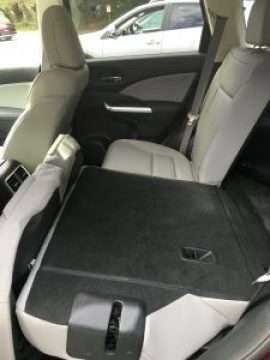
Adding convenience, the available Hands Free Access Power Tailgate that automatically opens and closes the tailgate by simply swiping your foot to activate a sensor under the rear of the vehicle is a Honda-first. Hauling is made easier with the new one-motion dive-down 60/40-split rear seat that falls softly when deployed rather than slamming down like so many others.

Honda offers two available engines on the 2017 CR-V beginning with its first ever turbocharged, 1.5-liter in-line four-cylinder engine with an EPA estimated fuel economy of 28 mpg in the city and 34 mpg on the highway when equipped with front wheel drive (FWD). The second engine option, a 2.4-liter direct-injected i-VTEC with Variable Timing Control powers the base model and should earn an EPA city/highway estimated fuel economy of 26/32 mpg when equipped with FWD. Both engines are mated to a CVT with Honda G-Shift control logic. The Active Shutter Grille system that lowers aerodynamic drag and helps improve fuel economy is another Honda-first. We averaged 31.3 mpg on the test drive.

Like the Civic hatchback, every 2017 CR-V is equipped with a green ECON button located on the center console near the shift lever. Activating the ECON mode helps improve fuel efficiency by modifying throttle mapping and HVAC operation.

All-wheel-drive (AWD) models feature an upgraded Real Time AWD system with a significant increase in maximum rear-wheel torque delivery.

Pricing for the 2017 CR-V starts at $24,985.

The redesigned CR-V and all-new Civic hatchback will please their enthusiastic and loyal customers as well as appeal to new fans.

BMW Recalls Certain 3 and 5 Series and X5 Models

 Recalls  Comments Off on BMW Recalls Certain 3 and 5 Series and X5 Models
Feb 042017
 

3 Series

Latino Traffic Report has learned that BMW of North America, LLC (BMW) is recalling certain 2000-2002 BMW 320i, 323i, 325i, 325xi, 330i, 330xi, 323Ci, 325Ci, 330Ci, M3, 323iT, 325iT and 325xiT vehicles, 2001-2002 525i, 530i, 540i, M5, 525iT and 540iT vehicles, and 2001-2003 X5 3.0i, X5 4.4i, and X5 4.6is vehicles. These vehicles may have had a driver-side air bag module installed as replacement equipment such as after a vehicle crash necessitating replacement of the original air bag, or as a remedy part for a prior recall.

5 Series

These replacement modules contain an air bag inflator that may rupture due to propellant degradation occurring after long-term exposure to lower absolute humidity, temperature and temperature cycling.

In the event of a crash necessitating deployment of the driver’s frontal air bag, the inflator could rupture with metal fragments striking the driver or other occupants resulting in serious injury or death.

BMW will notify owners, and dealers will inspect the driver side air bag module, replacing it as necessary, free of charge.

X5

The recall is expected to begin March 15, 2017. Owners may contact BMW customer service at 1-800-525-7417.

Owners may also contact the National Highway Traffic Safety Administration Vehicle Safety Hotline at 1-888-327-4236 (TTY 1-800-424-9153), or go to www.safercar.gov.

Long-term Car Review: 2017 Honda Accord Hybrid, Part 1

 Honda, Reviews  Comments Off on Long-term Car Review: 2017 Honda Accord Hybrid, Part 1
Jan 302017


As gas prices begin to creep up, consumers needn’t worry. No matter who heads the Environmental Protection Agency (EPA) under the current administration, California, the number-one car market in the country according to the National Automobile Dealers Association, will require carmakers to reduce emissions, which means hybrids will continue to offer fuel-saving options for years to come. While they still make up just a fraction of new car sales, hybrids have grown in availability and configurations, from compacts to luxury sport utility vehicles. Latino Traffic Report will spend the next three months with one in particular, the all-new 2017 Honda Accord Hybrid Touring.

It arrived in December and on a first impression, the Accord Hybrid is a looker. Honda redesigned the Accord for 2016 and the all-new hybrid, introduced last year, shares its sheet metal, plus it also benefits from its reputation. The top-selling car for the last three years in the United States, the Accord was just named “10 Best” for the thirty-first time by Car and Driver, an unprecedented honor for any vehicle. But as the name implies, the model I’m driving is a hybrid and its fuel-saving powertrain is its centerpiece.

The Accord Hybrid’s two-motor hybrid system combined with an ultra-efficient 2.0-liter i-VTEC Atkinson Cycle engine is matched to an electric continuously variable transmission. It achieves a peak-combined output of 212 horsepower, the highest of any midsize hybrid sedan.

Like many hybrids, it performs better in city traffic than on the highway—it has an EPA fuel economy rating of 49 miles per gallon (mpg) in the city and 47 mpg on the highway. I’m averaging about 47 mpg so far—I actually gained mileage on the highway once heading north on IH35.

To maximize fuel efficiency, there’s an Econ button that can be used at all times, as well as an EV button that when engaged, operates the hybrid on electric power only for small distances. When I need more power, I push the Sport mode button to give the hybrid a noticeable amount of giddy-up.

While the fuel economy will undoubtedly be its best feature, the Accord Hybrid also sits at the top of the Accord lineup, and the Touring trim is the top-of-the-line. As such, it comes very well-equipped, starting with Honda Sensing, a suite of safety features with advanced technology like adaptive cruise control that allows the driver to set and maintain certain a distance behind a vehicle,  forward collision warning, and lane keep assist.

Multiview back-up camera

Honda’s innovative LaneWatch camera can be engaged with the turn signal for views of the blind spot when changing lanes to the right. The picture isn’t that clear, however, and focusing can make it distracting. Though currently not available, a blind spot monitor would be preferable.

Creature comforts on this model include leather seats, with heated seats in the front and back, a touch sensitive seven-inch display screen with an additional display screen on top of that, navigation, a moonroof, and a multiview back-up camera. I’m getting used to the lack of knobs for volume control and tuning and while this model should come with SiriusXM satellite radio, it isn’t activated. It does, however, include a CD player—a happy surprise. I’ve put it and the MP3 USB port to use on road trips to San Antonio, Bryan, Houston, and Dallas.

Pricing for the Accord starts at $30,480. Pricing for the as-tested 2017 Accord Hybrid is $36,790.

Stay tuned for a final review later in the year.


Nunez Joins 2017 Mazda Prototype Team

 Noticias  Comments Off on Nunez Joins 2017 Mazda Prototype Team
Jan 232017


Latino Traffic Report has learned that Tristan Nunez will join the two-car Mazda Prototype team that will compete in the top category of the 2017 IMSA WeatherTech SportsCar Championship. Other drivers include Jonathan Bomarito, Tom Long, and Joel Miller.

The No. 55 Mazda Prototype (Soul Red Crystal livery) will be driven for the third consecutive season by the pairing of  Bomarito, 34, of Louisville, Tenn., and  Nunez, 21, of Boca Raton, Fla. Bomarito and Nunez recorded a league-leading three pole positions in 2016, led six races, and finished seventh in the final Prototype driver point standings.

Tristan Nunez

“I could not be more excited to get the season started. There have been quite a few rules changes that I am sure will make for an exciting race,” said Nunez. “As for the drivers, to be paired with Jonathan again is such an honor. I have learned so much from him, and I’m looking forward to another year alongside him and being under the Mazda tent with Joel and Tom for the full season. Really, I couldn’t have asked for a better group! I believe we’ve got what it takes to win, and I’m so excited to show that this season!”

Nunez holds the record as the youngest champion in a professional class of road racing in North America. He won the IMSA Prototype Challenge presented by Mazda (nee: Prototype Lites) series in 2012 with 11 wins at age 17. He became a Mazda-backed driver after winning the prestigious open-wheel Walter Hayes Trophy event at Silverstone, England. Nunez does presentations across the country on behalf of his own “Dnt txt n drV Foundation,” which is devoted to educating young people about the dangers of distracted driving.


CUV and Car Launch: 2017 Rogue, Rogue Hybrid, and Sentra SR Turbo

 Launches  Comments Off on CUV and Car Launch: 2017 Rogue, Rogue Hybrid, and Sentra SR Turbo
Jan 152017


It’s a happy coincidence when the name of your product matches that of a blockbuster movie. So it is with Nissan Rogue and Rogue One, the latest tale from the Star Wars franchise. Nissan recently launched the refreshed 2017 Rogue, all-new Rogue Hybrid, and Sentra SR Turbo in Greensboro, Georgia and Latino Traffic Report was there.

Impressive fuel economy from an all-new hybrid version—the first ever for Rogue— and enhanced technology and versatility should help the crossover utility vehicle (CUV) remain the top-selling Nissan model, while the new SR Turbo trim for the Sentra adds sportiness to the lineup.

Efforts to refresh the Rogue include a new front fascia with integrated fog lamps, and bumper. It now features the Nissan signature “V-Motion” grille and revised headlights with LED signature Daytime Running Lights and LED boomerang signature taillights in the rear. A new rear bumper and chrome-trim side door moldings complete the freshened appearance.

Versatility improves on the CUV with wide opening (77 degrees) rear doors for easier entry and exit to the rear passenger space. Available technology, like a new Motion-Activated Liftgate, uses a kick sensor system to open and close the tailgate. It’s standard on Rogue SL and available on Rogue SR as part of the SR Premium Package.

Refreshing changes continue on the inside with a new D-shaped steering wheel and leather-booted sport-mode shifter. Premium options like a heated steering wheel, memory for driver’s seats and mirror, and remote engine start are also now available, giving the Rogue a more premium look and feel.

It comes with two rows of seating for five but a third row can be added (except on the hybrid version) to expand seating to seven. Nissan’s innovative EZ Flex Seating System allows every seat except the driver’s to fold down—the front passenger seat folds rearwards—expanding versatility as well as cargo room to 70 cubic feet. But the Rogue’s configurability doesn’t end there. It also offers the Divide-N-Hide Cargo System that provides eighteen adjustable variations (two-row models only, not available with Rogue Hybrid) between the cargo and occupant areas.

Standard safety features include a RearView monitor, remote keyless entry, traction control, and Vehicle Dynamic Control. The available Rogue Safety Shield expands that list, adding a blind spot monitor, rear cross-traffic alert, Intelligent Cruise Control, and Forward Emergency Braking with Pedestrian Detection.

As mentioned, the new gasoline-electric hybrid version offers an additional powertrain option to the standard 170-horsepower 2.5-liter four-cylinder gasoline engine. Fuel economy on the all-new hybrid should reach 33 miles per gallon (mpg) in the city, 35 mpg on the highway, dropping slightly on all-wheel-drive (AWD) models. On the test drive, we achieved an average of 34.6 mpg.

This compares to the expected city/highway fuel economy for the non-hybrid of 26/33 mpg, and 25/32 mpg on AWD models.

Pricing for the 2017 Rogue starts at $24,760.

Nissan introduced a limited edition of the Rogue with a Star Wars theme and branding at the LA Auto Show in November and partnered with Lucasfilm Ltd for a fully integrated marketing campaign. The additions and improvements on the 2017 version, including the all-new hybrid, should continue to grab attention, even after the blockbuster comes out on DVD.

2017 Sentra SR Turbo

For an added treat, Nissan also revealed a new, sporty trim level for the 2017 Sentra, the SR Turbo. The best news is that it comes with a responsive six-speed manual transmission that put a smile on my face as I drove it on a quick route in Greensboro. For those who can’t drive a manual, an Xtronic transmission is also available.

The SR’s four-cylinder, 1.6-liter Direct Injection Gasoline turbo engine with 188 horses also improves performance. Enhancements to the suspension, front brakes, and electric power steering complete the driving experience.

Like the base model Sentra S, the SR base model lacks options. The next level, SV trim, can be upgraded, but only the highest trims, SR and SL, can be upgraded with premium packages that bring features like leather-appointed seating, a Bose Premium audio system with eight speakers, Blind Spot Warning and Rear Cross Traffic Alert.

Pricing for the 2017 Sentra SR Turbo starts at $17,855.