
2018 BMW X3
Summer’s heating up as families hit the road for vacation. There’s no question that sport and crossover utility vehicles (SUVs and CUVs) have claimed the family car market, but happily, the supply and variety from which to choose is incredibly healthy. Here’s an overview of some of the models tested by Latino Traffic Report (LTR).
Mazda CX-5 Grand Touring AWD

Mazda’s best-selling vehicle in the United States, the CX-5, stands out in a crowded segment with its design, including the signature Soul Red Crystal premium exterior paint ($595) on the test model. For 2018, this compact CUV moves ahead of the pack by making the blind spot monitor with rear cross-traffic alert a standard feature on all CX-5s, something even premium compact CUVs and SUVs don’t do. Also added to the standard features list for 2018 are a leather-wrapped steering wheel and new cylinder-deactivation
  technology; Mazda is the only automaker to offer this technology on a four-cylinder engine in North America.
The test model, CX-5 Grand Touring AWD, also included the i-ACTIVSENSE suite with High Beam Control, Lane Departure Warning, Lane-Keep Assist, and Mazda Radar Cruise Control with Stop and Go function.
 Powered by a 2.5-liter engine that delivers 187 horsepower and 186 lb.–ft. of torque with cylinder deactivation for better fuel economy and matched to a six-speed automatic transmission, the CX-5 should achieve an EPA estimated fuel economy of 24 miles per gallon (mpg) in the city and 30 mpg on the highway. It averaged 28.5 mpg on the test drive.
On road trips, entertainment features come in handy and Mazda’s infotainment system centers around Mazda CONNECT  with a seven-inch touch screen, Bluetooth audio streaming, and phone pairing. While it took four steps to set presets, there appeared to be no limit to the number allowed, from AM to SiriusXM Satellite radio.
With seating for five and 59.6 cubic feet (cu. ft.) of cargo room with the second-row seats folded, the 2018 Mazda CX-5 has a starting price of $25,125. The as-tested price came to $34,685.
Chevy Equinox


Chevy MyLink
Since its launch in 2005, the Equinox has been Chevrolet’s second-best selling vehicle overall, after the Silverado. It includes what families want, convenience and versatility, plus a few other features that other small SUVs don’t.
Under the hood, the Equinox offers three engine choices, all turbos—a 1.5-liter, 2.0-liter, and a 1.6-liter turbo diesel (a segment exclusive). LTR drove the 2.0-liter with 252 horsepower and 260 lb.–ft. of torque. The Equinox test model had an EPA city/highway estimated fuel rating of 22/28 mpg. It averaged 26.7 mpg on the test drive.
 Inside, the Equinox there’s up to 63.5 cu. ft. of maximum cargo space with the second row folded flat. During the test, the seats were heavy and slammed down when deployed.
 Certain brands may have created a reputation for safety but Chevy offers its own signature safety technology, starting with Teen Driver (standard) that allows parents to set controls and review driving history in order to encourage safe driving habits, even when they are not in the vehicle. The available Rear Seat Reminder, also on the test model, pings when the ignition is turned off to remind the driver to check the back seat before locking the SUV.
The standard MyLink infotainment system on the Equinox that supports Apple CarPlay and Android Auto, as well as the OnStar 4G LTE Wi-Fi hotspot, can be matched to a standard seven- or an available eight-inch-diagonal color touch screen.
Available in four trim levels, and front wheel or all wheel drive (FWD or AWD) combinations, pricing for the next-generation 2018 Equinox starts at $24,525. The as-tested price came to $43,050.
Lexus NX 300h

For road trips, fuel economy, comfort, and cargo carrying matter. The Lexus NX 300h hybrid competes handily in these areas. The test model also included the Lexus navigation package ($1,815), another road trip essential.
Lexus excels at comfort and luxury and the NX 300h test model was no exception. Enhanced by the Luxury Package ($4,545), it included buttery beige leather seating with heated and ventilated seats in the front. The second row also included a power button ($400) for folding the seats flat and exposing 53.7 cu. ft. of cargo room.
 Powered by a 2.5-liter four-cylinder engine and a small high-torque electric motor through its electronically controlled continuously variable transmission, it has an EPA estimated fuel economy of 33 mpg in the city and 30 mpg on the highway. It averaged 28.4 mpg on the test drive. The engine lacked a little power but the Sport mode, part of the standard Drive Mode Select system, gave it some oomph. Normal and Eco modes are also available as well as an EV mode for full
  electric power at speeds below 25 miles per hour (mph). Regenerative braking charges the electric motor to a generator that captures the kinetic energy of the wheels when the brake is applied, storing it in the nickel-metal hydride hybrid battery pack.
 Semi-autonomous features like adaptive cruise control are standard but the blind spot monitor with rear cross traffic alert was added to the test model ($660).
Other standard features included a backup camera, dual-zone climate control, Lexus Enform safety connect, and a power tilt and telescopic steering column.
For 2018 it gets a refreshed exterior and improved handling.
Pricing for the 2018 NX 300h starts at $39,330. The as-tested pricing came to $51,683.*
BMW X3 xDrive30i

All new for 2018, the BMW X3 brings a sporty element to the premium compact SUV segment (or Sports Activity Vehicle according to BMW), making it a bit more fun to drive than its competitors. Like its siblings,  the X4, X5, and X6, the X3 is built at BMW’s plant in Spartanburg, SC where 70 percent of BMW vehicles exported to 140 markets worldwide are produced.
The third-generation sports new fascia features including a three-dimensional kidney grille and fog lights featuring a hexagonal design. It’s also the first X3 to offer a factory installed trailer hitch.
A twin-power turbo 2.0-liter four-cylinder inline gasoline engine that produces 248 horses and 258 lb.–ft. of torque powered the X3 xDrive30i test model, matched to an eight-speed automatic transmission with shift paddles and xDrive all-wheel drive (AWD). It had an EPA estimated fuel economy of 22 mpg in the city and 29 mpg on the highway. It earned 24.1 mpg on the test drive.
Four drive modes, Eco Pro, Comfort, Sport, and Sport+, helped customize the ride and handling and overcome a slight turbo lag.

orange ambient lighting
Adding to that was the new 50:50 weight distribution between the front and rear axle.
Standard features on the test model included tri-zone climate control, a 40/20/40 split folding rear seat that can be released from the rear to expose 62.7 cu. ft. of cargo room, WiFi hotspot, and  power tailgate. The test model, X3 also included multiple packages—Convenience ($2,850), Driving Assistance ($900), Dynamic Handling ($1,400), Parking Assistance ($1,300), and Premium ($3,300)—that added features like a panoramic sunroof, variable sport steering, and oddly, a rearview camera—it’s standard on most vehicles these days.
Pricing for the 2018 BMW X3 starts at $42,450. The as-tested pricing came to $57,470.
Volvo XC60 T6 Inscription

Safety is paramount to Volvo so it’s no wonder that the redesigned 2018 version of the XC60 adds Oncoming Lane Mitigation to its list of standard collision avoidance safety features,  plus advancements to two available features—the Blind Spot Information System with steering assistance, part of the Vision Package ($1,100), and Pilot Assist, a semi-autonomous feature from Volvo, included on the test model with the Convenience Package ($2,000). It helped with steering, braking, and acceleration on roads at speeds up to 80
  mph, like adaptive cruise control but without needing a car in front of it to follow.
Two remarkable four-cylinder engines power the new XC60, a turbo 2.0-liter with 250 horsepower and 258 ft.–lb. of torque on the T5 base and a supercharged and turbocharged 2.0-liter with 315 horsepower and 295 lb.–ft. of torque on the T6 Inscription test model. It had an EPA estimated fuel economy of 21 mpg in the city and 27 mpg on the highway. It averaged 22.1 mpg during the test drive.
Blessed with Scandinavian design, inside and out, the T6 test model standard creature comforts  included leather seats, a beautiful dash intricately trimmed with driftwood-inspired wood accents, a nine-inch Sensus Connect touch screen that provided a clear vantage when utilizing the standard backup camera, a panoramic sunroof, multi-zone climate control, and 4G LTE connectivity with in-car Wi-Fi hotspot. It o
 ffered seating for five and 63.3 cu. ft. of cargo with the rear seats folded, a loss of about four inches from the previous XC60.
The Luxury Package ($3,000) added heated and ventilated Nappa leather seats and the Advanced Package ($1,900) added a 360-degree backup camera, among other features.
Representing 30 percent of Volvo’s global sales, the 2018 XC60 has a starting price of $42,495. The as-tested pricing was $63,290.
Volkswagen Atlas SEL Premium

Built in Chattanooga, Tennessee, the seven-passenger Atlas is a new entry into the midsize SUV market for Volkswagen. It offers utility with three rows of seats, including second a nd third rows that can fold flat to provide a maximum cargo volume of 96.8 cu. ft. behind the front-row seats. The seats on the test model, however, were heavy and slammed down when deployed.
The digital 12.3-inch TFT display in the instrument panel can also be customized, a feature usually reserved for premium vehicles.
While a 2.0-liter turbocharged four-cylinder engine that produces  235 horsepower and 258 lb.–ft. of torque is available, the test model, Atlas SEL Premium, is only powered by a 3.6-liter V6 that delivers 276 horses and 266 lb.–ft. of torque and is matched to an eight-speed automatic transmission. The maximum towing for the V6 is 5,000 lbs. with a factory-installed hitch.
The standard Start/Stop technology that cuts the engine off at a stop also helps conserve gas and while noticeable, it was less jarring than other systems. That said, the test model had an EPA estimated  city/highway fuel economy rating of 17/23 mpg. The test model, equipped with 4Motion all-wheel drive, averaged 17.2 mpg in the city and 22 mpg on the highway. Four Motion also included Active Control with Eco, Individual, Normal, and Sport driving modes but power was noticeably lost in the Eco mode.
 The test model also had three-zone climate control, leather seating with heated and ventilated seats in the front, adaptive cruise control, forward collision warning, a front and rear parking monitor, blind spot monitor, Fender audio, and eight-inch touch screen with navigation, and a CD player.
Pricing for the 2018 Atlas starts at $31,745. The as-tested pricing came to $49,415.
Ranger Rover Sport HSE

Some SUVs stand out for plushness, others for their off-road capability, and some, like the Ranger Rover Sport, for both. The test model, Range Rover Sport HSE Td6 doubled down on these attributes.
Piling tons of off-road capability onto a fancy SUV may seem at cross-purposes but the Land Rover’s brand legacy demands it. While most owners will keep their nearly six-figure SUV on the road, if they want to climb rocks, they can in the Range Rover Sport. Rather than drive modes, the Sport included off-road modes via the Terrain Response System—General, Snow, Mud and Sand.
The test model, however, stayed on the road, powered by the available 3.0-liter V6 diesel that produced 254 horsepower and 443 lb.–ft. of torque. Matched to an eight-speed automatic transmission, it had an EPA city/highway estimated fuel economy of 22/28 mpg. It  surpassed expectations during the test drive, achieving an average of 32.7 mpg.
Additional features affecting performance included Intelligent Stop/Start and full-time four-wheel drive (4WD). While the Sport version is supposed to be the more nimble Range Rover, it still  felt heavy and at times, difficult to maneuver.
Of the multiple interior tech features, the stand out was the 10.2-inch InControl Touch Pro infotainment four-panel display for selecting navigation, entertainment, climate control, and Bluetooth functions. Other posh features on the test model included a panoramic sunroof, Oxford perforated leather seats (heated and ventilated in the front), a TFT virtual instrument  panel, Head-up Display, and a heated steering wheel. For 2018, the Range Rover Sport gets a refreshed exterior and new version of the InControl Touch Pro.
The test model was also equipped with advanced safety features like a blind spot monitor, adaptive cruise control, and parking assistance. Pricing for the 2018 Range Rover Sport starts at $67,745. The as-tested price came to $73,645.*
Infiniti QX80 4WD

It takes special needs to step up to the big boys in the SUV segment, e.g. lots of capacity and versatility. Luxury and comfort also enhance a vessel like the 2018 Infiniti QX80 full-size premium SUV, or as Infiniti’s press release says: “It will appeal to a buyer that wants for nothing.”
A 5.6-liter V8 engine with 400 horses and 413 lb.–ft. of torque matched to a seven-speed automatic transmission propelled the massive seven-seater (or eight-seater with the second-row bench instead of captain’s chairs) along the highway. The test model, equipped with computer-controlled 4WD and Drive Mode  Selector (Snow and Tow), had an EPA estimated city/highway fuel economy of 13/19 mpg and a maximum towing capacity of 8,500 lbs. It averaged 15.3 mpg on the test drive.
Interior features on the test model testified to its unique craftsmanship, like real wood  accents, illuminated doorsills, Infiniti’s InTouch eight-inch touch screen, and the Bose premium audio system with SiriusXM Satellite radio and two USB ports. While all QX80s come with leather seating, the test model stepped it up a notch with the semi-aniline leather (made from the most desirable portion of the animal’s hide) with contrasting stitching and piping, part of the Deluxe Technology Package ($5,700).
 Additional features on the test model included the Theater Package ($2,450) with eight-inch monitors in the front headrests and heated second-row seats, and the Driver Assistance Package ($2,900) that included advanced safety technology like the blind spot monitor, adaptive cruise control, and back-up collision warning, among other features.
Pricing for the 2018 QX80 starts at $66,045. The as-tested pricing came to $84,660.
Toyota Land Cruiser

In 1957 the Toyota Land Cruiser was among the first Toyota vehicles sold in the U.S. Toyota’s oldest SUV currently on the market has evolved into a premium full-size SUV with refined good looks and advanced off-road capability.
The number eight figures prominently in the 2018 Land Cruiser, with seating for eight and a powertrain that includes a 5.7-liter V8 matched to an eight-speed electronically controlled automatic transmission. The V8 produces 381 horsepower and 401 lb.–ft. of torque and has a maximum towing capacity of 8,100 pounds.
It has an EPA city/highway estimated fuel economy of 13/18 mpg. It averaged 15.2 mpg on the test drive.
 Safety advancements on this family vehicle include the standard Toyota Safety Sense-P (TSS-P) system, with a pre-collision warning system with pedestrian detection, dynamic radar cruise control, and automatic high beams among other features. Stepping up to the 4WD version, like the as-tested model, brought technology like a blind spot monitor, a front and rear parking sensor, and rear cross traffic alert.
While the seats are split 60/40 in the second-row and 50/50 in the third-row, they were heavy and a little awkward to deploy. Once folded flat, however, the cargo room expanded to 81.7 cu. ft.
Entertainment and convenience features on the test model included four-zone climate control, JBL audio with navigation and a CD player, a nine-inch touchscreen, and a cooler box in the center console.
Toyota has reserved its premium products for Lexus, but the Land Cruiser is an exception. Pricing for the 2018 Land Cruiser starts at $84,960. The as-tested price, with the rear entertainment system ($2,220) came to $87,180.
*Driving impressions based on a 2017 model.


 The engine produces 147 horses and 184 lb.–ft. of torque. Assisted by improved aerodynamics, the new Jetta has an EPA estimated fuel economy of 30 miles per gallon (mpg) in the city and 40 mpg on the highway with either the manual or the automatic. It averaged 35.8 mpg on the test drive.


 Described by VW as its “hot hatch,” the GTI debuted in 1983 and since then has transformed the hatchback from a utilitarian car and into a sporty compact. Redesigned for the 2015 model year, the seventh generation of the Golf GTI included three available trim levels—S, SE, and Autobahn. They remain for 2018 but with a few improvements.
 forward collision warning, autonomous emergency braking with pedestrian monitoring, and keyless access with a push button start.
 Like other brands, VW has taken to using a warranty to tilt car buyers in their favor. The Golf GTI is covered by a transferable, six-year or 72,000-mile (whichever occurs first) bumper-to-bumper New Vehicle Limited Warranty.

 On the outside, the all-new Tiguan shares several design cues with its larger sibling, the
  Active Control, a unique feature with 4Motion, also allows more intrepid drivers to chose among four driving modes—On-road, Snow, Off-road, and Custom Off-road. To fine tune the On-road experience further, four additional modes—Normal, Sport, Eco, and Custom—can be engaged with the push of a button. Along curvy mountain climbs and descents, I tested the Sport mode. It improved handling via tighter steering but didn’t offer a noticeable increase in power.
 The new Tiguan tackles the versatility challenge by adding 10.6 inches in length, giving it up to 58 percent more cargo space than the current model. It also includes a 50/50 split third row third-row seat, suitable for children, on entry-level trims with front-wheel drive (FWD) and makes it available on models with VW 4Motion AWD technology. The 40/20/40 split second-row bench can recline and slide seven inches fore and aft. Both rows fold down to create a maximum of 65.7 cubic feet of cargo room.
 On the outside, the base has halogen headlights, LED daytime running lights and taillights, foglights with a cornering function, heated exterior mirrors with integrated turn-signal indicators, and 17-inch wheels. By comparison, the SEL Premium comes with 19-inch wheels, LED headlights with the Adaptive Front-lighting System, rain-sensing wipers, and power-folding exterior mirrors with puddle lights. For added convenience, the SEL Premium also includes the foot-activated, hands-free Easy Open power liftgate.


 The new 1.4-liter inline four-cylinder turbo engine with 153 horses is matched to a six-speed manual or available six-speed automatic transmission (North America). I drove the automatic and earned an average 35 mpg. A diesel engine becomes available in the spring of 2017.
 five years), and a rearview camera. New available features include wireless phone charging, heated rear seats and heated, leather-wrapped steering wheel.
 Oddly, neither a sunroof nor leather seats are available.

 were also included in the gauge cluster, as well as a power moonroof.


 All three engines include the Active Eco System and Driver Mode Select with an Eco option to conserve gas. The EPA estimated fuel economy for the test model is 22 mpg in the city and 32 mpg on the highway. I averaged 31 mpg.

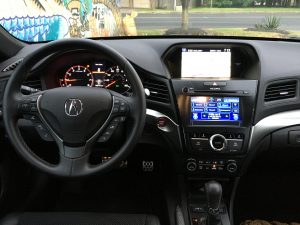 The sporty ILX gets its oomph from a 2.4-liter four-cylinder engine with 201 horsepower and 180 lb.–ft. of torque. Matched to an eight-speed dual-clutch transmission, the powertrain should achieve an EPA city/highway estimated fuel economy of 25/36 mpg. I averaged 29.9 mpg.
 lect technology to adjust ride and handling.
 features. The Tech Package added navigation, multi-view rear camera, and the Acura ELS AM/FM/CD sound system. Finally, the Acura Watch Plus Package completed the picture with adaptive cruise control, forward collision warning, and braking among other features.


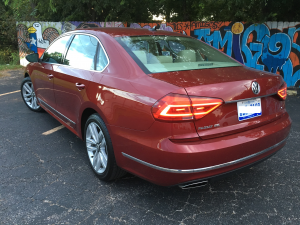


 Both also came with quattro all-wheel drive, but the sedan should manage to achieve one more mile per gallon in the city and highway, with an EPA estimated fuel economy of 24/33 mpg. I averaged 23.7 mpg with the Sedan and 21.4 mpg with the Cabriolet.
 M Satellite radio. The sedan also came with a panoramic sunroof.

 To show it means business, Lexus powers the GS F with a 5.0-liter V8 with 467 horses and 389 lb.–ft. of torque. It’s matched to an eight-speed Sport Direct Shift Automatic Transmission with steering wheel mounted paddle shifters.
 For better performance and handling, the GS F sits on a double-wishbone in the front and rear multi-link suspension. Lexus adds Brembo disc brakes and Active Sound Control, to increase throatiness and rumble to the engine and exhaust notes. Drive Mode Select control further enhances performance by giving the driver the following options—NORMAL, ECO, SPORT S, SPORT S+—while Torque Vectoring Differential helps the GS F hug the road.
 All new for 2016, improvements in 2017, like a new Linear Adaptive Variable Suspension, accentuate the positive, with more power and better responsiveness.

 On the inside, the GLI SEL continues to add features like dual-zone climate control, a 6.3-inch touchscreen for radio controls and navigation (it was a little clunky to operate), heated black leatherette front seats with red accent stitching, a power sunroof, a leather wrapped steering wheel and shift knob, and a Fender premium audio system developed through a collaboration between Fender and Panasonic. It includes 400 watts of power, nine speakers, a trunk-mounted subwoofer, and my favorite low-tech feature, a CD player.


